Tuesday, March 17, 2015

St. Patrick's Day


St. Patrick, the patron saint of Ireland was born around the year 390. His story
in regards to bringing Christianity to Ireland begins in 432 when he arrived as a missionary Bishop. He spent the rest of his life converting the population and organizing the Church before his death in Armagh in 461. It would take too long to enumerate the many accomplishments of Patrick. He was a tireless defender of the faith and his efforts have had a lasting effect on the Irish Church as well as the Church abroad.

The times St. Patrick lived in were rough and many opposed his "new foreign religion" (Catholic Christianity). One prayer or hymn ascribed to St. Patrick is known as St. Patrick's Breastplate, (also known as the Deer's Cry or Lorica.) It is thought that St. Patrick taught this prayer to his followers and would recite it to ask God's protection for them on their journeys.


I arise to-day Through a mighty strength, the invocation of the Trinity, 
Through belief in the Threeness,
Through confession of the Oneness
Towards the Creator

I arise today
Through the strength of Christ with His Baptism,
Through the strength of His Crucifixion with his Burial,
Through the strength of His Resurrection with His Ascension,
Through the strength of His descent for the Judgment of Doom.

I arise today
Through the strength of the love of Cherubim,
In obedience of Angels,
In the service of the Archangels,
In hope of resurrection to meet with reward,
In prayers of Patriarchs,
In predictions of Prophets,
In preaching of Apostles,
In faith of Confessors,
In innocence of Holy Virgins,
In deeds of righteous men.

I arise today
Through the strength of heaven:
Light of Sun,
Radiance of Moon,
Splendor of Fire,
Speed of Lightning,
Swiftness of Wind,
Depth of Sea,
Stability of Earth,
Firmness of Rock.

I arise today
Through God's strength to pilot me:
God's Might to uphold me,
God's Wisdom to guide me,
God's Eye to look before me,
God's Ear to hear me,
God's Word to speak for me,
God's Hand to guard me,
God's Way to lie before me,
God's Shield to protect me,
God's Host to secure me
against snares of devils,
against temptations of vices,
against inclinations of nature,
against everyone who shall wish me ill,
Afar and a-near,
Alone and in multitude.

I summon today all these powers between me and these evils,
against every cruel merciless power that may oppose my body and soul,
against incantations of false prophets,
against black laws of heathenry,
against false laws of heretics,
against craft of idolatry,
against spells of witches and smiths and wizards,
against every knowledge that endangers man's body and soul.

Christ to shield me today
against poison, against burning,
against drowning, against wounding,
so that there may come to me abundance of reward.
Christ with me, Christ before me, Christ behind me,
Christ in me, Christ beneath me, Christ above me,
Christ on my right, Christ on my left,
Christ where I lie down, Christ where I sit down, Christ where I arise,
Christ in the heart of every man who thinks of me,
Christ in the mouth of everyone who speaks of me,
Christ in every eye that sees me,
Christ in every ear that hears me.

I arise today
Through a mighty strength, the invocation of the Trinity,
Through belief in the Threeness,
Through confession of the Oneness,
Towards the Creator of Creation.

Salvation is of the Lord.
Salvation is of Christ.
May Thy Salvation, O Lord, be ever with us.


Tuesday, March 10, 2015

A NOVENA TO ST. JOSEPH ~ 3/10-3/19


This novena to St. Joseph requests divine assistance from someone close to our Lord, quite close indeed: His foster-father! Although he was from royal ancestry, a descendant of King David, St. Joseph has inspired the faithful for generations as a model of humility and service as a carpenter caring for his Holy Family. St. Bernard called him “the faithful and prudent servant whom the Lord appointed master over His household—His foster-father [and] the comfort and support of His Mother.”

Glorious St. Joseph, foster-father and protector of Jesus Christ! To you do I raise my heart and hands to implore your powerful intercession. Please obtain for me from the kind Heart of Jesus the help and graces necessary for my spiritual and temporal welfare. I ask particularly for the grace of a happy death, and the special favor I now implore (name it).
Guardian of the Word Incarnate, I feel animated with confidence that your prayers in my behalf will be graciously heard before the throne of God. 

V. O glorious St. Joseph, through the love you bear to Jesus Christ, and for the glory of His Name,
R. Hear my prayers and obtain my petitions. Amen.


3/10~Day 1 – St. Joseph Most Just, Pray for us!
3/11~Day 2 – St. Joseph Most Prudent, Pray for us!
3/12~Day 3 – St. Joseph Most Loving Husband, Pray for us!
3/13~Day 4 – St. Joseph Most Strong, Pray for us!
3/14~Day 5 – St. Joseph Most Obedient, Pray for us!
3/15~Day 6 – St. Joseph Most Faithful, Pray for us!
3/16~Day 7 – St. Joseph Pillar of Families, Pray for us!
3/17~Day 8 – St. Joseph Patron of the Dying, Pray for us!
3/18~Day 9 – St. Joseph Terror of Demons, Pray for us!
 
St. Thomas Aquinas, the preeminent 13th century theologian, and St. Teresa of Avila, the celebrated 16th century Carmelite nun, both praised St. Joseph’s ability to assist us in all our needs before God. Is it any wonder then that he is a patron saint of the Church, workers, families, home buyers and sellers, and, as we read in this novena, the grace of a happy death? Don’t be afraid to ask for his aid!

Thursday, February 12, 2015

Be of Strong Heart During Lent


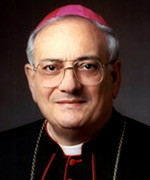
A Letter from Bishop Nicholas DiMarzio

My dear brothers and sisters in the Lord,

Next Wednesday, Feb. 18, we begin the season of Lent, the time when we prepare ourselves to celebrate the Easter Mystery. It is a time of preparation which over the centuries has taken many different forms.
Bishop DiMarzio's Bio

In the Message for Lent that our Holy Father, Pope Francis, has issued this year, he has taken the theme: “Make your hearts firm.” (Jas 5:8) The season of Lent is the time when we are asked to firm up our faith, when we are to give special attention to training our will so that we can love God all the more. The phrase “make your hearts firm” has special meaning to me because five-and-a-half years ago I underwent quadruple bypass surgery. One of the wonderful gifts one receives following this surgery is a red heart-shaped pillow which is needed to hold tight to your chest whenever you cough since you do feel that you are coming apart. Quadruple bypass surgery entails breaking the sternum, commonly called the breastbone, for the surgery. It takes many months for that bone to heal and to this day I still feel the wires which were put in place to keep it together.

The pillow has a special meaning, as it is called the “Brave Heart Pillow.” Yes, your heart must be brave to undergo that type of operation. And so it is with Lent, we have that brave heart, for without brave hearts we will have wills that are weak and we will not be allowed to follow the will of God. As Pope Francis says in his Lenten Message, “As a way of overcoming indifference and our pretensions of self-sufficiency, I would invite you all to live this Lent as an opportunity for engaging in what Benedict XVI called a formation of the heart (cf. Deus Caritas Est, 31). A merciful heart does not mean a weak heart. Anyone who wishes to be merciful must have a strong and steadfast heart, closed to the tempter but open to God. A head which lets itself be pieced by the Spirit so as to bring love along the roads that lead to our brothers and sisters. And, ultimately, a poor heart, one which realizes its own poverty and gives itself freely for others.”

Many times we see Lent as a time of mortification and that is good. To mortify means to kill, killing or deadening our wills through a set of good practices such as fasting, doing good works and trying to rein in our disordered appetites which hinder the full integration of our human person and to freely respond to the Holy Spirit. Sometimes this entails doing the things we do not want to do, which is the greatest kind of mortification. St. Paul tells us, “So then, my brothers, we have no obligation to human nature to be dominated by it. If you do live in that way, you are doomed to die; but if by the Spirit you put to death the habits originating in the body, you will have life.” (Rm 8-13) How important it is that we acquire good habits. It is unfortunate that bad habits are much easier to acquire. To change our bad habits into good habits is something that we all can work on during Lent.

The Lenten tradition of 40-days of preparation has its roots in the Old Testament. In the Book of Deuteronomy, 9-18, we hear that Moses falls prostrate before Yahweh and spent 40 days and 40 nights with nothing to eat or drink on account of all the sins which the people of Israel had committed. They had broken His Covenant and Moses tried to restore the Covenant by his personal fasting.

In the First Book of Kings, we hear of the Prophet Elijah who on his journey to Horeb, where he was to encounter God, ate and drank to be strengthened for his walk of 40 days and 40 nights to reach Horeb. And so we see that fasting can be positive or negative in preparing us for the journey of Lent. We can abstain or we can do good works.

Perhaps our greatest example, however, is the Lord, Himself, who we hear on this First Sunday of Lent being tempted in all of the synoptic Gospels. We see that the temptations that the Lord undergoes all have something to do with our human nature, and all of the temptations come from the devil. We know that He is tempted by the devil to turn stones into bread, as we are to satisfy our basic human needs and natural desire for pleasure. We see how Jesus was tempted to jump into the pinnacle of the Temple with the promise that God would save Him, testing God’s providence in enhancing the human pride that comes from testing God. And finally, Jesus is tempted to bow down and worship the devil, to make a concession so that Jesus can have the whole world as His Kingdom. Through the course of our lifetime, we experience ourselves all of these temptations in some way.

And so, we return to the practices of Lent and the mortification which I mentioned previously. We must deaden the will to the wrong appetites, enabling us to be active in doing certain good works and passive in accepting the contradictions and the difficulties of our daily life.

At times, we need to mortify our interior senses. Sometimes our intelligence, or imagination, leaves us daydreaming and wasting time and not being able to get rid of a thought which leads us nowhere. Exteriorly, this is fasting which sometimes helps us to be more cognizant of our relationship to God and enables us to be more positive by giving up something and seeking God in our lives.

Mortification has been described as the drawbridge that enables us to enter into the castle of prayer, because prayer is the ultimate goal of mortification. We are not masochists as Christians, yet we know that without mortification we will not find the true happiness which is ours on Earth. Only the person who understands mortification, who can live simply and enjoys the good things of life, will understand how to accept the suffering that is part of every human life. Another spiritual author said that a day without mortification is a day lost because we have not united ourselves to God.

Finally, Jesus came to the cross having prepared Himself for 33 years. His disciples who are most intimate with Him, do not understand the mystery of the cross, not until the Resurrection.

And so it is with us, as we put out into the deep of Lent, we will not understand the meaning of our mortification, our suffering, our good works. Only at the time of the Resurrection, this Easter for us, will we understand the deeper meaning of why we have undergone this period of preparation that is so much part of our faith which at the same time enlivens and challenges our faith.
From the Tablet

Thursday, February 5, 2015

Seeking God in the Silence


“Where shall the word be found, where will the word
Resound? Not here, there is not enough silence…”
∼ T.S. Eliot, Ash-Wednesday

One of the truly awful torments of modern life, from whose myriad aggressions no one is entirely safe, is noise. More and more, it fills the space that was once marked by that silence whose absence we seem increasingly not to notice. Nor even, it seems, to mind, so accustomed have we grown to ever higher and more intrusive levels of din. Indeed, so often are we in flight from silence, so quickly do we turn up the volume, that one might think the work of suppression part of a larger strategy to deflect the emptiness of our own lives. Thus the ambient noise allows us not to think, to leave unattended the whole inner life, which we might otherwise activate, were there only enough silence to encourage the exercise.


“We are no longer able to hear God,” warns Pope Benedict, “when there are too many different frequencies filling our ears.” Where the decibel levels are so screamingly shrill as to drive all the silence away, it is no surprise that his presence goes undetected. So where does one go to escape the din? And if such places actually exist, will it cost very much to stay? For how long? The writer Pico Iyer, author of a number of studies on the subject, tells us that he regularly disappears into the silence, sequestering himself every three or four months in a small monastic cell about a thousand feet above an ocean. Why does he do it? He goes, he tells us, “to become another self, the self that we all are if only we choose to unpack our overstuffed lives and leave our selves at home.”


It is obviously something very important to him, this entering into the silence. Where, effectively removed from the noise and the clutter of the daily round, he ventures with the utmost daring, “to lay claim to a mystery at the heart of me.” And I know just what he means, having myself spent a number of days in a comparable state of silence; I too found it wonderful and welcoming. Of course, unlike Mr. Pico, who finds himself seasonally ensconced in a monastery whose faith he does not share, I can’t imagine a setting both silent and yet without recourse to God. Except for the fact that Mr. Pico is free to come and go as he pleases, his situation strikes me as not much different from solitary confinement in a prison. The silence is undeniably there, all right, but it leads to a fixation on the self that seems, well, solipsistic.


So on what terms of incarceration do I spend my silent stretches? Well, the last time around, it was the result of an invitation to speak to a community of Cistercian monks, who had asked me to come and give a series of conferences on the spiritual life. Here are men who take the vocation of silence with utter seriousness. Their monastery, located high in the mountains outside Salt Lake City, had been founded in 1947 by a handful of Trappists from Gethsemani, Kentucky, determined on building a contemplative outpost in the heart of Mormon country. It was the aftermath of the Second World War, and among the GIs returning home, many having experienced firsthand the futility and horror of battle, there were some, a heroic few, who sought enlistment in a discipline more demanding even than the Marine Corps. It was holiness they were after. Unending intimacy with God. But it had to be pursued in a setting surrounded by, immersed in, silence. How else could they seek and find that Sounding Silence of which all the great mystics speak? There, amid the stillness, they would, in the words of T.S. Eliot, “be still and still moving / Into another intensity / For a further union, a deeper communion….”


And so it happened that a small contingent of resolute young men belonging to the Order of the Cistercians of the Strict Observance, headed west in search of God. Throwing up a couple of Quonset huts for themselves, they set about in the spirit of St. Bernard of Clairvaux, the order’s most celebrated member, to rediscover the joys of twelfth-century religious life.


So what was it like living among medievals in a world rendered blessedly mute save for the movement of the wind outside, the lovely lilt of music and prayer inside? It was as if time itself had stood still. Will heaven be like this? I wondered. In his moving encyclicalOn Christian Hope, Pope Benedict provides a glimpse—a sudden, luminous glint, as it were—of the joys that may await us on the other side of silence.


To imagine ourselves outside the temporality that imprisons us and in some way to sense that eternity is not an unending succession of days in the calendar, but something more like the supreme moment of satisfaction, in which totality embraces us and we embrace totality—this we can only attempt. It would be like plunging into the ocean of infinite love, a moment in which time—the before and after—no longer exists … such a moment is life in the full sense, a plunging ever anew into the vastness of being, in which we are simply overwhelmed with joy.


And while we do not as yet possess this life, we nevertheless feel ourselves drawn to it in the silence that beckons, soliciting us by its benign and gentle grasp to let go, “to put off” (again, the words of Eliot come to mind):


Sense and notion. You are not here to verify,
Instruct yourself, or inform curiosity
Or carry report. You are here to kneel
Where prayer has been valid. And prayer is more
Than an order of words, the conscious occupation
Of the praying mind, or the sound of the voice praying.


Can this happen without silence? Is it possible to acquire this repose of the soul, never mind how imperfect, unless there is silence? Certainly we long for it, and even in the midst of its noisy absence we feel ourselves drawn towards it; but without some conscious effort to create a space for it, nothing will happen. “A condition of complete simplicity,” is how Eliot describes it. And the cost, he asks? It can never be less than everything.


And all shall be well and
All manner of things shall be well
When the tongues of flame are in-folded
Into the crowned knot of fire
And the fire and the rose are one.


So, yes, it will take some getting used to, this business of finding time for silence. A lifetime at least. But the effort will be worth it, providing as it must the setting for that necessary and salutary cultivation of the soul on which the life of holiness depends. And what really is silence but a whole world in which the spirit is set free to commune, not simply with its own deepest self, but with God himself. He Who Is.


Which is pretty much what the twenty or so monks living in Utah have been about all these years. Of that original group that began sixty or more years ago, not many have survived, and those who have, along with a handful of others who signed on later, all looked pretty long in the tooth to me. The abbot, for example, a most agreeable young man in his early seventies, told me the average age was just over eighty. I’d have put the figure rather higher than that. (Between conferences, I will confess, I could never be quite sure if anyone would survive.) Still, it was the oldest ones, those closest to the end of their journeys, who impressed me most. I think of dear Brother Felix, for example, who, God willing, must be in his late nineties by now. What a lovely man he was! Bent and gnarled by age and illness, his sight virtually gone, I watched him day by day moving in a sort of rhythmic silence from station to station, in a Via Dolorossa that had become his life.


And what will the fate of the monastery be, if fresh recruits cannot be found? Will God supply the need? He surely did seven centuries ago when the charism of Cistercian life found concrete expression in over five-hundred abbey churches strewn about the countryside of Northern Europe by the year 1300. Another one-hundred-and-fifty arose in the following century. “It’s a matter for prayer,” the Abbot says, his voice bespeaking a confidence borne of his own intense life of prayer.


All things being possible with God, I’d put my money on the monks. After all, isn’t prayer the thing they do best? And inhabiting, as they feel themselves obliged to do, a whole world of silence, the perfect medium for the life of prayer could scarcely be improved upon. Yes, I do believe God will reward such faithfulness to prayer with renewed life and vocations.

Sunday, November 23, 2014

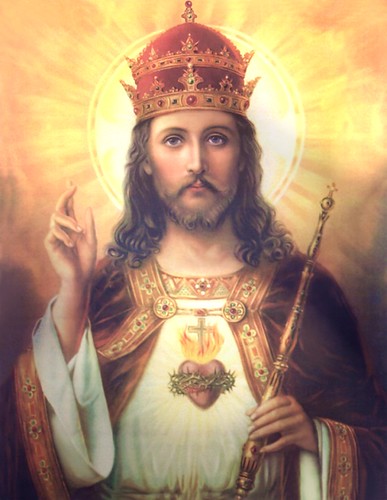
The Feast of Christ the King


"That in the name of Jesus every knee should bow, of those that are in Heaven, on earth and under the earth: And that every tongue should confess that the Lord Jesus Christ is in the glory of God the Father." ~Philippians 2:10-11
Christ Himself speaks of His Own kingly authority in His last discourse, speaking of the rewards and punishments that will be the eternal lot of the just and the damned; in His reply to the Roman magistrate, who asked Him publicly whether He were a king or not; after His resurrection, when giving to His Apostles the mission of teaching and Baptizing all nations, He took the opportunity to call Himself king, confirming the title publicly, and solemnly proclaimed that all power was given Him in Heaven and on earth. These words can only be taken to indicate the greatness of his power, the infinite extent of His kingdom. What wonder, then, that He Whom St. John calls the "prince of the kings of the earth" appears in the Apostle's vision of the future as He Who "hath on His garment and on His thigh written 'King of kings and Lord of lords!'." It is Christ Whom the Father "hath appointed heir of all things"; "for He must reign until at the end of the world He hath put all his enemies under the feet of God and the Father."
It was surely right, then, in view of the common teaching of the sacred books, that the Catholic Church, which is the kingdom of Christ on earth, destined to be spread among all men and all nations, should with every token of veneration salute her Author and Founder in her annual liturgy as King and Lord, and as King of Kings. And, in fact, she used these titles, giving expression with wonderful variety of language to one and the same concept, both in ancient psalmody and in the Sacramentaries.
 
God made promises to Father Abraham and King David. These promises are revealed in Genesis 22:16-18 and II Kings 7:10-19 respectively:
Genesis 22:16-18
By my own self have I sworn, saith the Lord: because thou hast done this thing, and hast not spared thy only begotten son for my sake: I will bless thee, and I will multiply thy seed as the stars of heaven, and as the sand that is by the sea shore: thy seed shall possess the gates of their enemies. And in thy seed shall all the nations of the earth be blessed, because thou hast obeyed my voice.

II Kings 7:10-19
And I will appoint a place for my people Israel, and I will plant them, and they shall dwell therein, and shall be disturbed no more: neither shall the children of iniquity afflict them any more as they did before, from the day that I appointed judges over my people Israel: and I will give thee rest from all thy enemies. And the Lord foretelleth to thee, that the Lord will make thee a house. And when thy days shall be fulfilled, and thou shalt sleep with thy fathers, I will raise up thy seed after thee, which shall proceed out of thy bowels, and I will establish his kingdom. He shall build a house to my name, and I will establish the throne of his kingdom for ever. I will be to him a father, and he shall be to me a son: and if he commit any iniquity, I will correct him with the rod of men, and with the stripes of the children of men. But my mercy I will not take away from him, as I took it from Saul, whom I removed from before my face. And thy house shall be faithful, and thy kingdom for ever before thy face, and thy throne shall be firm for ever. According to all these words and according to all this vision, so did Nathan speak to David.

And David went in, and sat before the Lord, and said: Who am I, O Lord God, and what is my house, that thou hast brought me thus far? But yet this hath seemed little in thy sight, O Lord God, unless thou didst also speak of the house of thy servant for a long time to come: for this is the law of Adam, O Lord God.
These prophecies are fulfilled in Christ, Who is King of Israel ("Christ" means "Anointed One," and the anointing referred to is the anointing King David received). Our Lord, though, is not only the ruler of the restored Davidic Kingdom (the Church), but is the King of Kings -- the King of All. The only way for peace to have a chance in this world is for all to see Him for Who He is: the King before Whom we must bow and Whom we must obey.

Though this Feast is a new one, promulgated by Pope Pius XI in 1925 in his Encyclical Quas Primas, it is a most awesome and important one! Vive Christus Rex!

On this day, we pray for the conversion of all to Christ, and for all governments to recognize Him as King and conform their laws to His teachings. This is the only way to peace!

Apocalypse 19:15-16:
And out of his mouth proceedeth a sharp two-edged sword, that with it he may strike the nations. And he shall rule them with a rod of iron: and he treadeth the winepress of the fierceness of the wrath of God the Almighty. And he hath on his garment and on his thigh written: KING OF KINGS AND LORD OF LORDS.
Today you may receive a plenary indulgence by praying the Consecration of the Human Race to the Sacred Heart, going to Confession, and receiving the Eucharist. We beg God to bring all people to Him and to be our King. 

 ~~~~~~~~~~~~~~~~~~~~~~~~~~~~~~~~~~~~~~~~~~~~~~~~~~~

Consecration of the Human Race to the Sacred Heart of Jesus on the Feast of Christ the King


Most sweet Jesus, Redeemer of the human race, look down upon us humbly prostrate before Thine altar. We are Thine, and Thine we wish to be; but, to be more surely united with Thee, behold each one of us freely consecrates himself today to Thy most Sacred Heart.
Many indeed have never known Thee; many too, despising Thy precepts, have rejected Thee. Have mercy on them all, most merciful Jesus, and draw them to Thy sacred Heart. Be Thou King, O Lord, not only of the faithful who have never forsaken Thee, but also of the prodigal children who have abandoned Thee; grant that they may quickly return to Thy Father's house lest they die of wretchedness and hunger.
Be Thou King of those who are deceived by erroneous opinions, or whom discord keeps aloof, and call them back to the harbor of truth and unity of faith, so that there may be but one flock and one Shepherd.
Be Thou King of all those who are still involved in the darkness of idolatry or of Islamism, and refuse not to draw them into the light and kingdom of God. Turn Thine eyes of mercy towards the children of the race, once Thy chosen people: of old they called down upon themselves the Blood of the Savior; may It now descend upon them a laver of redemption and of life.
Grant, O Lord, to Thy Church assurance of freedom and immunity from harm; give peace and order to all nations, and make the earth resound from pole to pole with one cry: "Praise be to the divine Heart that wrought our salvation; to It be glory and honor for ever." Amen. 
Please read about the Kingship of Christ and come to understand the concept's absolute importance. Truly pray the Mass -- at all times, but especially on this day. Pray the Consecration with your whole heart!


Tuesday, October 7, 2014

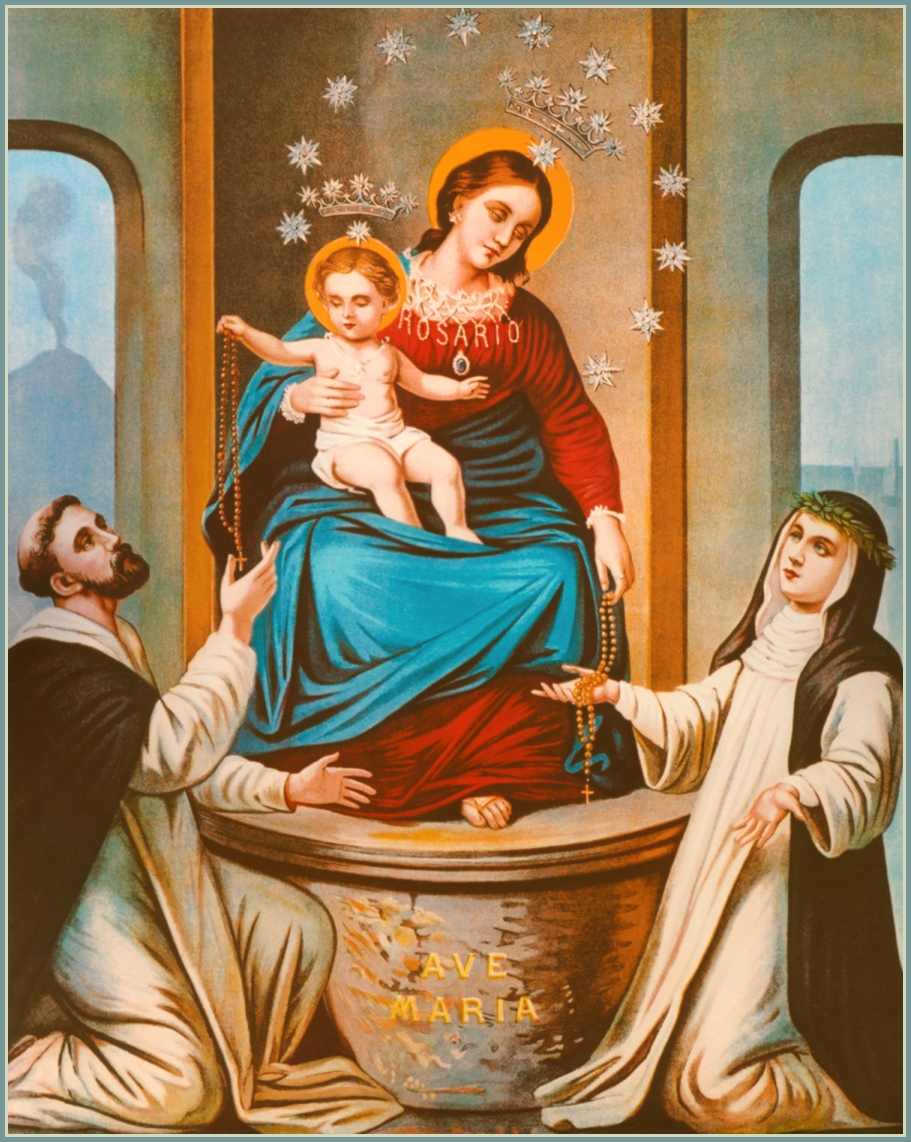
Feast of the Most Holy Rosary - October 7

The purpose of the rosary is to help us meditate on the great mysteries of our salvation. Pius XII called it a compendium of the gospel. The main focus is on Jesus—His birth, life, death and resurrection. The Our Fathers remind us that Jesus' Father is the Initiator of salvation. The Hail Marys remind us to join with Mary in contemplating these mysteries. They also make us aware that Mary was and is intimately joined with her Son in all the mysteries of His earthly and heavenly existence. The Glory Be's remind us that the purpose of all life is the glory of the Trinity.
The rosary appeals to many. It is simple. The constant repetition of words helps create an atmosphere in which to contemplate the mysteries of God. We sense that Jesus and Mary are with us in the joys and sorrows of life. We grow in hope that God will bring us to share in the glory of Jesus and Mary forever.

On October 7, the Roman Catholic Church celebrates the yearly feast of Our Lady of the Rosary. Known for several centuries by the alternate title of “Our Lady of Victory,” the feast day takes place in honor of a 16th century naval victory which secured Europe against Turkish invasion. Pope St. Pius V attributed the victory to the intercession of the Blessed Virgin Mary, who was invoked on the day of the battle through a campaign to pray the Rosary throughout Europe.
The feast always occurs one week after the similar Byzantine celebration of the Protection of the Mother of God, which most Eastern Orthodox Christians and Eastern Catholics celebrate on October 1 in memory of a 10th-century military victory which protected Constantinople against invasion after a reported Marian apparition.
Pope Leo XIII was particularly devoted to Our Lady of the Rosary, producing 11 encyclicals on the subject of this feast and its importance in the course of his long pontificate.
In the first of them, 1883's “Supremi Apostolatus Officio,” he echoed the words of the oldest known Marian prayer (known in the Latin tradition as the “Sub Tuum Praesidium”), when he wrote, “It has always been the habit of Catholics in danger and in troublous times to fly for refuge to Mary.”
“This devotion, so great and so confident, to the august Queen of Heaven,” Pope Leo continued, “has never shone forth with such brilliancy as when the militant Church of God has seemed to be endangered by the violence of heresy … or by an intolerable moral corruption, or by the attacks of powerful enemies.” Foremost among such “attacks” was the battle of Lepanto, a perilous and decisive moment in European and world history.
Troops of the Turkish Ottoman Empire had invaded and occupied the Byzantine empire by 1453, bringing a large portion of
the increasingly divided Christian world under a version of Islamic law. For the next hundred years, the Turks expanded their empire westward on land, and asserted their naval power in the Mediterranean. In 1565 they attacked Malta, envisioning an eventual invasion of Rome. Though repelled at Malta, the Turks captured Cyprus in the fall of 1570.
The next year, three Catholic powers on the continent – Genoa, Spain, and the Papal States - formed an alliance called the Holy League, to defend their Christian civilization against Turkish invasion. Its fleets sailed to confront the Turks near the west coast of Greece on October 7, 1571.
Crew members on more than 200 ships prayed the Rosary in preparation for the battle - as did Christians throughout Europe, encouraged by the Pope to gather in their churches to invoke the Virgin Mary against the daunting Turkish forces.


Some accounts say that Pope Pius V was granted a miraculous vision of the Holy League's stunning victory. Without a doubt, the Pope understood the significance of the day's events, when he was eventually informed that all but 13 of the nearly 300 Turkish ships had been captured or sunk. He was moved to institute the feast now celebrated universally as Our Lady of the Rosary.
“Turkish victory at Lepanto would have been a catastrophe of the first magnitude for Christendom,” wrote military historian John F. Guilmartin, Jr., “and Europe would have followed a historical trajectory strikingly different from that which obtained.”

A second victory gained that year on the Octave of the Assumption determined Pope Clement XI to command the Feast of the Rosary to be celebrated by the universal Church. Leo XIII added the invocation "Queen of the most Holy Rosary, pray for us," to the Litany of Loretto. The Feast is in reality a great festival of thanksgiving for the signal and countless benefits bestowed on Christendom through the Rosary of our blessed Queen.
In modern times successive popes have urged the faithful to pray the Rosary. It is a form of contemplative prayer, mental and vocal prayer, which brings down God’s blessing on the Church. It is a biblically inspired prayer which is centered on meditation on the salvific mysteries of Christ in union with Mary, who was so closely associated with her Son in his redeeming activity.
 "Oh Mary, conceived without sin, please pray for us who have recourse to thee and protect us in the mantle of your love until our beloved Savior Jesus returns in power and great glory to rule forever and ever. Amen."

Saturday, October 4, 2014

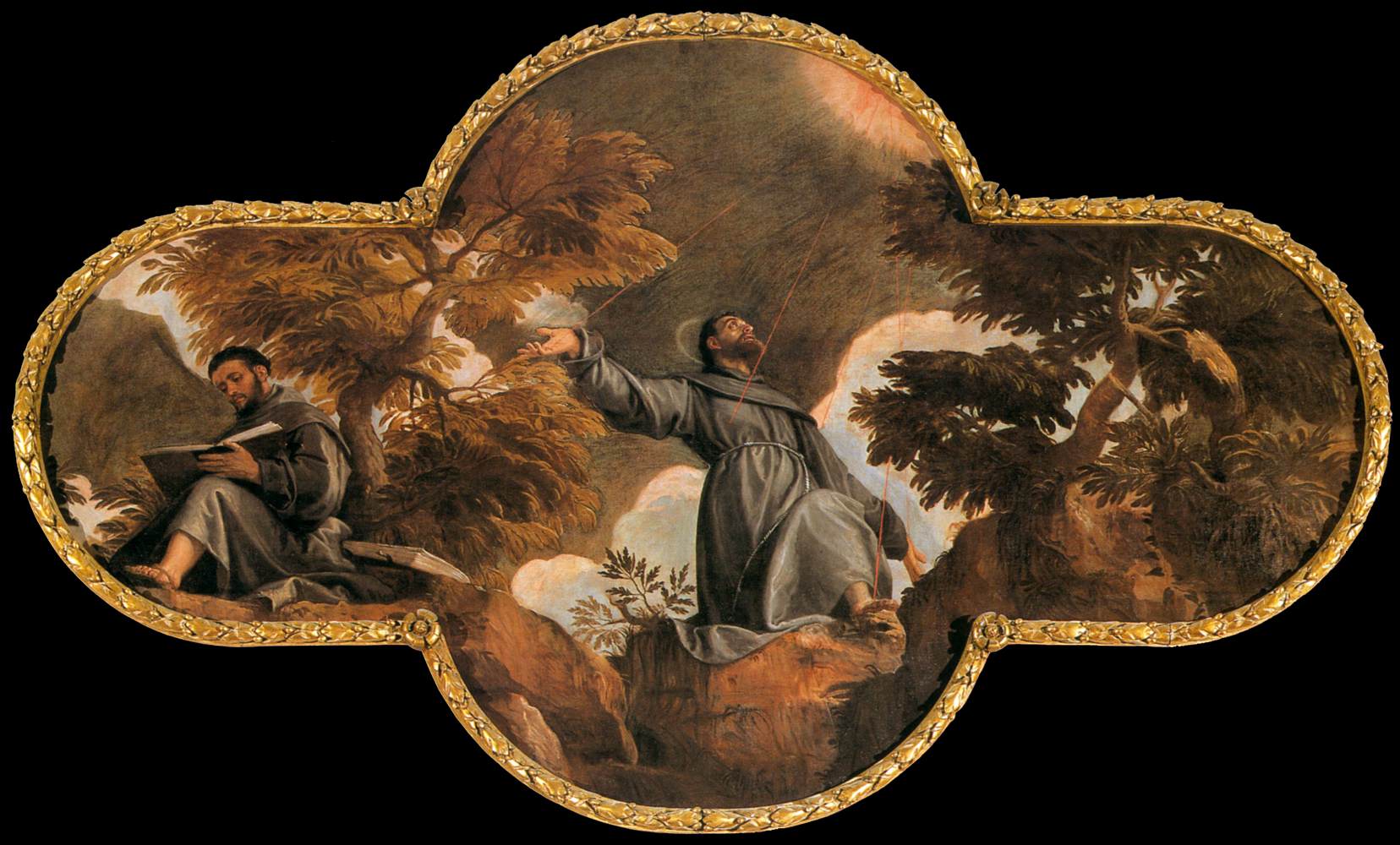
St. Francis of Assisi - Oct 4th

Francis of Assisi was a poor little man who astounded and inspired the Church by taking the gospel literally—not in a narrow fundamentalist sense, but by actually following all that Jesus said and did, joyfully, without limit and without a sense of self-importance. Serious illness brought the young Francis to see the emptiness of his frolicking life as leader of Assisi's youth. Prayer—lengthy and difficult—led him to a self-emptying like that of Christ, climaxed by embracing a leper he met on the road. It symbolized his complete obedience to what he had heard in prayer: "Francis! Everything you have loved and desired in the flesh it is your duty to despise and hate, if you wish to know my will. And when you have begun this, all that now seems sweet and lovely to you will become intolerable and bitter, but all that you used to avoid will turn itself to great sweetness and exceeding joy."

From the cross in the neglected field-chapel of San Damiano, Christ told him, "Francis, go out and build up my house, for it is nearly falling down." Francis became the totally poor and humble workman.
He must have suspected a deeper meaning to "build up my house." But he would have been content to be for the rest of his life the poor "nothing" man actually putting brick on brick in abandoned chapels. He gave up all his possessions, piling even his clothes before his earthly father (who was demanding restitution for Francis' "gifts" to the poor) so that he would be totally free to say, "Our Father in heaven." He was, for a time, considered to be a religious fanatic, begging from door to door when he could not get money for his work, evoking sadness or disgust to the hearts of his former friends, ridicule from the unthinking.

But genuineness will tell. A few people began to realize that this man was actually trying to be Christian. He really believed
what Jesus said: "Announce the kingdom! Possess no gold or silver or copper in your purses, no traveling bag, no sandals, no staff" (Luke 9:1-3).

Francis' first rule for his followers was a collection of texts from the Gospels. He had no idea of founding an order, but once it began he protected it and accepted all the legal structures needed to support it. His devotion and loyalty to the Church were absolute and highly exemplary at a time when various movements of reform tended to break the Church's unity.
He was torn between a life devoted entirely to prayer and a life of active preaching of the Good News. He decided in favor of the latter, but always returned to solitude when he could. He wanted to be a missionary in Syria or in Africa, but was prevented by shipwreck and illness in both cases. He did try to convert the sultan of Egypt during the Fifth Crusade.
During the last years of his relatively short life (he died at 44), he was half blind and seriously ill. Two years before his death, he received the stigmata, the real and painful wounds of Christ in his hands, feet and side.

On his deathbed, he said over and over again the last addition to his Canticle of the Sun, "Be praised, O Lord, for our Sister Death." He sang Psalm 141, and at the end asked his superior to have his clothes removed when the last hour came and for permission to expire lying naked on the earth, in imitation of his Lord.
Francis of Assisi was poor only that he might be Christ-like. He recognized creation as another manifestation of the beauty of God. In 1979, he was named patron of ecology. He did great penance (apologizing to "Brother Body" later in life) that he might be totally disciplined for the will of God. His poverty had a sister, humility, by which he meant total dependence on the good God. But all this was, as it were, preliminary to the heart of his spirituality: living the gospel life, summed up in the charity of Jesus and perfectly expressed in the Eucharist.

Sunday, June 15, 2014

Saint Germaine Cousin Virgin (1579-1601)

Saint Germaine Cousin was born in 1579 in Pibrac, a small village not far from Toulouse, France. From her earliest years she was a frail, sickly child, and throughout her life was afflicted with scrofula, a tubercular condition affecting particularly the glands of the neck. In addition, her right arm and hand were deformed and partially paralyzed. In spite of her many afflictions, the emaciated child possessed a charming, sweet disposition. Germaine endured not only bodily sufferings, but harsh, cruel treatment from her stepmother, who had a deep aversion for the little girl. The child was almost starved to death and obliged to sleep in the barn on a pile of leaves and twigs under the stairway. At break of day, summer and winter, she would drive the sheep into the fields to graze, then watch them until evening. She had to spin during this time, and if the allotted wool was not spun, she was severely punished.

 The village children, not sharing the hostility of the adults toward this forlorn child, loved to listen to her speak about the goodness and love of God while she guarded her flock. The only instruction Germaine ever received was the catechism taught after Sunday Mass in the village church, which she attended with joy. During the long hours of solitude she spent in the fields and in the stable at night, she remained in sweet communion with God, and never complained of her hard life.


Germaine's heart was full of charity for others. Beggars would come to her for sympathy and to share the scraps of bread which she had. When Madame Cousin heard about this she would often beat Germaine while screaming, "I'm not going to feed every tramp that passes by." Then one cold winter day Germaine went into the kitchen to get some scraps for her hungry friends, when suddenly her stepmother walked in. The angry woman thought the girl was carrying some bread in her apron.
She grabbed a stick and chased the girl to an open area, hoping to prove to all that Germaine was a thief. Armand demanded that Germaine open her apron. The frightened girl did and suddenly a wonderful miracle took place. Instead of scraps of bread, a bunch of beautiful, fresh flowers, not from that area, tumbled to the ground! This only increased the admiration and love of the villagers towards Germaine, and stepmother was shown to be a tyrant. Other miracles too were reported, which proved that God showered His blessings on the poor girl. It was reported that the barn where she slept was flooded with light at night and that heavenly singing was heard by those passing by.
Finally after almost twenty years of neglect and abuse, Lawrence Cousin put his foot down and demanded that Germaine's living conditions be changed for the better. He apologized for his neglect and asked the girl to take her place inside the house and live with the family. But Germaine told her father, "Papa, I am perfectly happy living in the barn." In living alone and in suffering, the girl found Jesus and would not exchange Him for the comforts of the world!
Germaine's years of prayers and sacrifices finally began to change the heart of the cruel stepmother. Armand was not given much time to make up for the past years of her wicked treatment towards the poor girl. Germaine's life was now coming to an end; her illnesses had worn her out and she had little strength left.
In the spring of 1601, a priest was traveling to the city of Toulouse. It was night when he reached the town of Pibrac and he
could hardly see his way in the darkness. Suddenly a beautiful brightness lit up the sky and the priest saw a vision of a beautiful procession of virgins in brilliant light, coming down from Heaven into the village of Pibrac. Then he saw a virgin going up to Heaven, who was wearing a brilliant crown, in the company of many angels that were brighter than the stars. That same night, two religious, also having lost their way in the darkness, saw the same vision as well. But neither the priest nor the two religious understood the meaning of the lovely vision.
In the morning, Lawrence could hear the sheep bleating and realized that Germaine had not taken them out as she had done in the past eighteen years. "Germaine," he cried out, but the girl did not answer. Going into the barn, he stopped suddenly; there he found his poor daughter dead, on her bed of straw. Her rosary was entwined around her fingers and her face was shining like an angel. She died as she had lived; without human comfort.
Meanwhile that same morning, the travelling priest and the other two religious hurried to tell the villagers saying: "Last night I saw a virgin going up to Heaven. She was wearing a brilliant crown and was accompanied by a crowd of angels that were brighter than the stars." Up to that time the villagers did not know about anything special that happened in their town, but from the description that the travellers gave, they knew at once that it was Germaine, the holy shepherdess.
Running to the Cousin farm, the villagers found that Germaine had died, but she was beautiful to look upon; God had healed her body. She looked more like an angel than a person! Her faithful friends, the children, had gathered wild carnations and stalks of rye to make a wreath for her head. And the converted Madame Cousin dressed her poor stepdaughter in a beautiful dress, and placed a candle in her hands. Germaine's body was then buried in the village church where she had loved to pray.
But this is not the end of the story. In 1644, forty-three years after Germaine's death, an older woman asked to be buried in the church near the pulpit. Two workmen removed some flagstones and they were surprised to see just below the surface, the body of a young girl. Like madmen they ran through the village telling about their discovery and bringing back a crowd of people with them. Two of the people who had known Germaine during her life, testified that the body of the girl was indeed that of the Germaine Cousin, the shepherdess. The body was then removed and placed in a glass casket. Then it was put in the vestibule of the church for all to see.
Devotion to Germaine grew and many people prayed to her. In 1789, almost 200 years after her death, the French Revolution had begun. The Masons; who are enemies of the Catholic Church, tried to destroy everything that was Catholic. But they were having a hard time destroying the faith of the people in the region of France where the body of Germaine was honoured. To help destroy the Catholic Faith of these people, three soldiers dug a hole and threw the body of Germaine into the hole. Then they covered it with quicklime and dirt, to cause the body of the holy girl to turn to dust.
Those who had performed this sacrilegious deed were suddenly struck with different diseases. The neck of one soldier was deformed so that it turned till his face looked backwards! And another was scarcely able to walk without the aid of crutches. The third soldier carried his punishment with him to his grave, but the other two soldiers repented of their sin and obtained a complete cure through the prayers of Germaine.
In spite of what the Revolutionaries had done, the faithful continued to pray at the new grave of Germaine, the holy shepherdess. After the revolution, her body was removed from the grave and it was found to be as fresh as ever. Thanks to the power of God, the quicklime had not injured Germaine's body in any way!
Many years later, because of all the miracles which Germaine had obtained from God through her prayers, in June, 1867, Blessed Pope Pius IX canonized her as a saint and made June 15th, her special Feast Day.  St. Germaine Pray for Us.  

Saint Germaine Cousin is the patron saint of victims of child abuse, a problem that continues to impact millions of children world-wide each year, and an estimated 800,000 children in the United States. UNICEF estimates that nearly 20% of girls and 10% of boys will be victims of physical or sexual abuse prior to the age of 18. From this startling statistics, it is clear that our world needs the intercession of Saint Germaine now, more than ever!

Thursday, May 15, 2014

St. Dymphna

The Story of St. Dymphna


Dymphna was the only child of a pagan king who is believed to have ruled a section of Ireland in the 7th century. She was the very picture of her attractive young Christian mother.
When the queen died at a very young age, the royal widower's heart remained beyond reach of comfort. His moody silences pushed him on the verge of mental collapse. His courtiers suggested he consider a second marriage. The king agreed on condition that his new bride should look exactly like his former one.
His envoys went far a field in search of the woman he desired. The quest proved fruitless. Then one of them had a brilliant idea: Why shouldn't the king marry his daughter, the living likeness of her mother?
Repelled at first, the king then agreed. He broached the topic to his daughter. Dymphna, appalled, stood firm as a rock. "Definitely not." By the advice of St. Gerebern, her confessor, she eventually fled from home to avoid the danger of her refusal.
A group of four set out across the sea - Father Gerebern, Dymphna, the court jester and his wife. On landing at Antwerp, on the coast of Belgium, they looked around for a residence. In the little village of Gheel, they settled near a shrine dedicated to St. Martin of Tours.
Then spies from her native land arrived in Gheel and paid their inn fees with coins similar to those Dymphna had often handed to the innkeeper. Unaware that the men were spies, he innocently revealed to them where she lived.

The king came at once to Gheel for the final, tragic encounter. Despite his inner fury, he managed to control his anger. Again he coaxed, pleased, made glowing promises of money and prestige. When this approach failed, he tried threats and insults; but these too left Dymphna unmoved. She would rather die than break the vow of virginity she had made with her confessor's approval.
In his fury, the king ordered his men to kill Father Gerebern and Dymphna. They killed the priest but could not harm the young princess.
The king then leaped from his seat and with his own weapon cut off his daughter's head. Dymphna fell at his feet. Thus Dymphna, barely aged fifteen, died. Her name appears in the Roman Martyrology, together with St. Gerebern's on May 15.
In the town of Gheel, in the Flemish-speaking region of Belgium, great honor is paid to St. Dymphna, whose body is preserved in a silver reliquary in the church which bears her name. Gheel has long been known as a place of pilgrimage for persons seeking relief or nervous or emotional distresses. In our century, the name of St. Dymphna as the heavenly intercessor for such benefits is increasingly venerated in America.

The remains of Saint Dymphna were later put into a silver reliquary and placed in the Gheel church named in her honour. The remains of Saint Gerebernus were moved to Xanten, Germany. During the late 15th century the original St. Dymphna's Church in Gheel burned, and necessity obliged the erection of the magnificent "Church of St. Dymphna," which was consecrated in 1532 and now still stands on the site where her body was first buried.

A phenomenon is said to have occurred immediately after the finding of the tombs. A number of people with epilepsy, mental illnesses and persons under evil influences who had visited at the tomb of Dymphna were cured. Ever since that time, she has been invoked on behalf of such people.

 St. Dymphna is the patron saint of the nervous, emotionally disturbed, mentally ill, and those who suffer neurological disorders - and, consequently, of psychologists, psychiatrists, and neurologists. She is also the patron saint of victims of incest.

Good Saint Dymphna, great wonder-worker in every affliction of mind and body, I humbly implore your powerful intercession with Jesus through Mary, the Health of the Sick, in my present need. (Mention it.) Saint Dymphna, martyr of purity, patroness of those who suffer with nervous and mental afflictions, beloved child of Jesus and Mary, pray to Them for me and obtain my request.
(Pray one Our Father, one Hail Mary and one Glory Be.)
Saint Dymphna, Virgin and Martyr, pray for us.