
Friday, April 22, 2016


Wednesday, April 20, 2016
SlowER than Molasses lately! ... SORRY!!
Well ... I've been down more than up since the beginning of the year between the arthritis, rotator cuff problems, a few more fun things and now pneumonia. I had it for a while before I gave in, but my PCP came on 3/16 and had me walk a bit. My Oxygen went down to 50 something, so she said no getting around it anymore ... and called rescue to take me to the ER. So laid there for hours getting IV antibiotics and fluids and they sent me home with a script for a z-pack and 24/7 oxygen. Thought I was doing pretty well till a few days ago, but it's making another visit apparently. PCP just here a little while ago and advised to take another course of z-pack and nebulizer 4x/day. Course she didn't have an ex-ray machine with her, but after listening to my lungs, it was easy for her to determine the junk was building up again. So very knocked out and lethargic, but trying to get things done. I nearly flipped a week after the hospital with what I got in the mail. Over 2 grand for the ER and even though it was medically necessary to go home in an ambulance due to the fact that I needed oxygen, I got a bill for over a grand for the 9 mile ride. (Donations gratefully accepted! lol) So .... ain't no fun getting old! LOL Anyway, appreciate extra prayers if you've a mind to; thanks. And by the way.... If you DO have a mind to pray for others, just as I have monthly Masses said for the customers of BattleBeads, (← please click, share and "LIKE" this page and get me over a thousand!) I've made a FaceBook page for the BattleBeads Prayer Warriors which will also share in monthly Masses. Just join or "LIKE" the page to join us! You can go there to see who needs prayers and pray; but if you can't make it once in a while, God knows who's on the page and who needs what, so you can simply include the BattleBeads Prayer Warriors intentions in your daily prayers. Easy enough, huh? So, in closing, I will do my best to get to everything as soon as I can and I thank you for your patience. The folks that have been waiting really long will also receive a little 'thank you' with their orders! Blessings and please pray for me and my caregiver, Carl who also now has pneumonia as well and was in the hospital for a few days with it, but home now. Please pray that his pancreatic cancer is totally gone and never returns ... God's Will be done in all. Thanks!
I"m also thinking of a special deal to go with the Jubilee Year of Divine Mercy .... will announce shortly :)
Blessings!
I"m also thinking of a special deal to go with the Jubilee Year of Divine Mercy .... will announce shortly :)
Blessings!
Saturday, April 16, 2016
St Bernadette Soubirous Feast Day – April 16 (France: February 18th)

St Bernadette Soubirous
Born at Lourdes, France, on January 7, 1844. She was the oldest child of a miller named Francis Soubirous and his wife, Louise. She went by Bernadette as a child, and lived in abject poverty with her parents. She suffered from asthma, and was a poor student, which kept her from making her first Holy Communion until she was 14. On February 11, 1858, while collecting firewood with her sisters along the banks of the Gave River near Lourdes, she alone saw a vision of a beautiful woman inside a cave above the riverbank. She was dressed in white and blue with golden roses on her feet. St Bernadette’s report was not immediately accepted, even by her mother, but her visions of the Lady drew increasingly larger crowds. Despite great hostility on the part of the socialist civil authorities, St Bernadette Soubirous’ reports of the visions continued, and on February 25 Our Lady told St Bernadette to “Drink of the fountain,” and caused a spring to flow from the earth.

St Bernadette Soubirous became a Sister of Notre Dame at Nevers in 1866, and she remained there, near Lourdes, for the rest of her life. She became a member of the Confraternity of the Cord of St. Francis, having been received into this society after she had become a religious sister. St Bernadette suffered greatly from tuberculosis of the bone in her right knee until her death on April 16, 1879.
St Bernadette Soubirous’ body was exhumed on September 22, 1909, and was found to be incorrupt, and her skin had the same color as that of a living person. St Bernadette was found in a similar state during a second exhumation in 1919. After this occasion she was placed in a gold and glass reliquary at the motherhouse of the Sister of Nevers, where she appears to be sleeping even until this day.

St Bernardette Soubirous was canonized in 1933 by Pope Pius XI. The little town of Lourdes became the site of pilgrimages, similar to Santiago de Compostella in Spain, attracting millions of faithful Catholics every year. Astonishing healings began almost immediately in the miraculous water at the shrine of Our Lady of Lourdes.
Thursday, April 14, 2016
A Revolutionary Pope for Revolutionary Times

Eighty-one year old men are not the first people who come to mind when we hear the word “revolutionary.” But 125 years ago, one such man—Vincenzo Pecci, better known to history as Pope Leo XIII—did something radical. By issuing the first modern social encyclical, Rerum Novarum, he ushered in a new era for Catholicism’s relationship with what we often call “modernity,” especially the world created by the Industrial Revolution and the upheaval in ideas precipitated by Adam Smith’s Wealth of Nations.
This wasn’t the first occasion that Leo entered into discussions of political economy. His second encyclical, Quod Apostolici Muneris (1878), promulgated just 10 months into his pontificate dealt directly with the topic of socialism. Not mincing his words, Leo bluntly stated that socialism—whatever its form—corrupted the state, damaged the family, violated legitimate property rights, contradicted the commandment against theft, and, above all, was contrary to divine and natural law.
That’s strong stuff. Yet, as Rerum Novarum illustrated, Pope Leo wasn’t a libertarian. But then neither was Adam Smith, at least by contemporary standards. Certainly, Leo admired the French Catholic free market liberal, Frederic Bastiat (1801-1850), who’s buried in Eglise Saint Louis des Français in Rome. In a pastoral letter published only 18 months before being elected pope, the-then Cardinal Pecci of Perugia wrote: “A celebrated French economist, Bastiat, has grouped and shown as in a picture the multiplied benefits man finds in society.” That said, Leo was not blind to the social turmoil (or what the twentieth-century economist Joseph Schumpeter famously called “creative destruction”) that’s part-and-parcel of capital-intensive market economies.
Critically Engaging Modernity
Pope Leo wasn’t interested in trying to recreate a pre-capitalist world or even promoting some type of social democracy. While utterly uncompromising on matters of faith and morals, Leo refused to wed the Catholic Church to a sometimes-romanticized past. Instead he wanted Catholics to take seriously what Rerum Novarum’s first sentence described as “That spirit of revolutionary change” which was upending old certainties to which some Catholics, battered by the forces unleashed by the French Revolution, were understandably inclined to cling.
This, I’d suggest, is the broad context in which Rerum Novarum should be read. Between 1878 and 1903, Leo issued an astonishing 85 encyclicals. Many dealt squarely with the political, social, and economic challenges associated with the “new things” that, having started in Western Europe and North America, were engulfing the globe. In this regard, Leo arguably showed himself to be a revolutionary pope made for revolutionary times.
Many practical steps were taken during Leo XIII’s pontificate to better position the Church in the modern world so it could undertake its core mission of spreading the Gospel. Leo initiated, for example, negotiations that gradually ended the Kulturkampf launched by Imperial Germany against its Catholic subjects in the 1870s. Here Leo was aided by Otto von Bismarck’s recognition that his assault against the Catholic Church in Germany had failed. Moreover, Bismarck needed Germany’s instinctively anti-socialist Catholics if he wanted to contain the rise of socialism in Germany. Within ten years of Leo’s election to the papacy, most of Bismarck’s anti-Catholic legislation had been repealed or gutted.
Another Leonine move involved the pope’s distancing of the Church from the royalist cause, or, more precisely, to affirm that the Church could accommodate itself to a variety of political arrangements. That was one purpose of his 1892 encyclical Au Milieu des Sollicitudes. As the French title suggests, this text indicated to Catholics in France that they weren’t obliged to support a monarchical regime and could reconcile themselves to the Third Republic. Despite the encyclical acknowledging the French Revolution’s often viciously anti-Catholic dimension, many French Catholics were shocked by Leo’s words. Yet, despite the ongoing conflict between France’s Catholics and the Republic which underpinned the Dreyfus Affair and eventually led to France’s 1905 law of separation and the expulsion of religious orders, the encyclical’s long term-effect was to detach the Catholic Church from entanglement in throne-and-altar arrangements.
In this light, we see that Rerum Novarum forms part of a distinct papal program. Though the encyclical reiterates his earlier denunciation of socialism, Leo does not present industrial capitalism as something to be opposed holus bolus. Indeed, the text rigorously affirms—without absolutizing—private property (using language quite close to that of John Locke); insists that there are natural inequalities willed by God which are necessary for society to flourish; and warns against excessive state economic intervention, especially efforts to replace the Church’s charitable and anti-poverty work with government agencies.
There is in fact no call in Rerum Novarum for industrial capitalism to be somehow replaced with an entirely different economic system. Leo was more concerned with ameliorating capitalism’s disruptive social effects. Hence, while lamenting the disappearance of guilds (many of which had degenerated into closed shops and vehicles for protectionism), Leo endorsed the in-principle legitimacy of trade unions. Yet he was careful to ground unions on the principle of free association: the same principle, incidentally, that is central to the processes of contract and free exchange which are indispensable for market economies. This was accompanied by Leo stressing that neither contractual arrangements nor free exchange were exempt from the demands of justice. It was not enough, Leo held, for two people to agree for the terms of a contract to be just. Commutative justice, as indispensable as it is, wasn’t the only form of justice. It was subordinated to the demands of general or legal justice.
The Leonine Case for Freedom
In case this language of commutative and legal justice sounds familiar, that’s because it harkens back to Aquinas and the entire natural law tradition. Rerum Novarum references Aquinas many times as it uses natural law reasoning to better understand the new things of the time. Aquinas himself was quite familiar with the world of business, commerce, and money. Capitalism had, after all, first taken on definitive cultural and institutional form in medieval Catholic Europe.
Rerum Novarum’s invocation of natural law categories, however, goes beyond exploring how principles of justice play out in modern economic conditions. It also forms part of Leo’s wider and more ambitious agenda: the revitalization of natural law reasoning within the Church in order to apply to the business of making sense of a modern world that prided itself on its attachment to reason.
Natural law thought never fell into abeyance in nineteenth-century Catholicism. Many Catholic intellectuals, especially Italians such as Blessed Antonio Rosmini and Luigi Taparelli SJ, had deployed it to think through the political and economic realities created by the French Revolution. Leo XIII’s own brother, Cardinal Giuseppe Pecci SJ, was a noted natural law scholar. From Leo’s standpoint, natural law was the obvious way for the Church to (1) help explain the truths of Revelation to people who demanded proofs based on reason while also (2) entering into discussion of contemporary political and economic issues with people who didn’t accept Christian revelation.
This project was launched by one of Leo’s most important encyclicals, issued just over a year after his papacy began. In underscoring Thomistic philosophy’s importance for comprehending the truths of faith and reason, Aeterni Patris (1879) transformed Catholic seminary formation and revived natural law discourse among Catholics more generally. Part of the objective was to demonstrate to self-described modern people that Catholicism took reason just as, if not more, seriously as they did. That was especially true when it came to one subject extolled by the Enlightenment and its heirs—human liberty.
This brings us to another of Leo’s most significant but largely neglected encyclicals: Libertas. Published three years before Rerum Novarum, this text begins with the resounding affirmation that “Liberty, the highest of natural endowments, being the portion only of intellectual or rational natures, confers on man this dignity—that he is ‘in the hand of his counsel’ (Sir. 15:14) and has power over his actions.” There is much, Leo affirms, which is good in what he called “modern liberties”: “whatsoever is good,” he writes, “in those liberties is as ancient as truth itself.” The point, however, which Libertas drives home again and again, is that modern expressions of freedom, whether in terms of rights or institutions, must be grounded in right reason, not feelings or majority-will. Otherwise, liberty would underpinned by unreason and inevitably degenerate into license.
During Leo’s time, many Christians and non-Christians cheerfully assented to this argument. Today, however, it is widely disputed. Many resist any claim that knowledge of the truth of good and evil is inscribed into man’s very reason itself. To that extent, this core natural law proposition is surely one of the most revolutionary propositions that can be made today, including, it must be said, to those Catholics who have embraced emotivist accounts of human choice and action. It’s a testimony to Leo’s farsightedness that he understood that one of the major philosophical struggles in the modern world would concern the foundations of freedom.
The son of conservative Italian aristocrats, a distinguished diplomat, a talented bishop-administrator, and firm defender of that most traditional of popes, Blessed Pius IX, Leo XIII would at first glance seem to be the least likely of revolutionaries. Yet as we celebrate Rerum Novarum’s 125th anniversary, it’s worth recalling how this particular pope managed, without compromising doctrine, to face the Church up to developments that, for some Catholics of the time, verged on anathema. Whether it’s the challenges presented by economic globalization, the problems associated with increasingly complicated financial markets, or the incessant rights-talk that’s presently strangling coherent public discourse, Leo’s call to critically engage modernity—i.e., affirm the good, identify errors, and remind people of the Gospel’s core truths—surely remains valid for us today.
By Samuel Gregg
Samuel Gregg is Research Director at the Acton Institute. He has authored many books including, most recently, For God and Profit: How Banking and Finance Can Serve the Common Good (2016).
This wasn’t the first occasion that Leo entered into discussions of political economy. His second encyclical, Quod Apostolici Muneris (1878), promulgated just 10 months into his pontificate dealt directly with the topic of socialism. Not mincing his words, Leo bluntly stated that socialism—whatever its form—corrupted the state, damaged the family, violated legitimate property rights, contradicted the commandment against theft, and, above all, was contrary to divine and natural law.
That’s strong stuff. Yet, as Rerum Novarum illustrated, Pope Leo wasn’t a libertarian. But then neither was Adam Smith, at least by contemporary standards. Certainly, Leo admired the French Catholic free market liberal, Frederic Bastiat (1801-1850), who’s buried in Eglise Saint Louis des Français in Rome. In a pastoral letter published only 18 months before being elected pope, the-then Cardinal Pecci of Perugia wrote: “A celebrated French economist, Bastiat, has grouped and shown as in a picture the multiplied benefits man finds in society.” That said, Leo was not blind to the social turmoil (or what the twentieth-century economist Joseph Schumpeter famously called “creative destruction”) that’s part-and-parcel of capital-intensive market economies.
Critically Engaging Modernity
Pope Leo wasn’t interested in trying to recreate a pre-capitalist world or even promoting some type of social democracy. While utterly uncompromising on matters of faith and morals, Leo refused to wed the Catholic Church to a sometimes-romanticized past. Instead he wanted Catholics to take seriously what Rerum Novarum’s first sentence described as “That spirit of revolutionary change” which was upending old certainties to which some Catholics, battered by the forces unleashed by the French Revolution, were understandably inclined to cling.
This, I’d suggest, is the broad context in which Rerum Novarum should be read. Between 1878 and 1903, Leo issued an astonishing 85 encyclicals. Many dealt squarely with the political, social, and economic challenges associated with the “new things” that, having started in Western Europe and North America, were engulfing the globe. In this regard, Leo arguably showed himself to be a revolutionary pope made for revolutionary times.
Many practical steps were taken during Leo XIII’s pontificate to better position the Church in the modern world so it could undertake its core mission of spreading the Gospel. Leo initiated, for example, negotiations that gradually ended the Kulturkampf launched by Imperial Germany against its Catholic subjects in the 1870s. Here Leo was aided by Otto von Bismarck’s recognition that his assault against the Catholic Church in Germany had failed. Moreover, Bismarck needed Germany’s instinctively anti-socialist Catholics if he wanted to contain the rise of socialism in Germany. Within ten years of Leo’s election to the papacy, most of Bismarck’s anti-Catholic legislation had been repealed or gutted.
Another Leonine move involved the pope’s distancing of the Church from the royalist cause, or, more precisely, to affirm that the Church could accommodate itself to a variety of political arrangements. That was one purpose of his 1892 encyclical Au Milieu des Sollicitudes. As the French title suggests, this text indicated to Catholics in France that they weren’t obliged to support a monarchical regime and could reconcile themselves to the Third Republic. Despite the encyclical acknowledging the French Revolution’s often viciously anti-Catholic dimension, many French Catholics were shocked by Leo’s words. Yet, despite the ongoing conflict between France’s Catholics and the Republic which underpinned the Dreyfus Affair and eventually led to France’s 1905 law of separation and the expulsion of religious orders, the encyclical’s long term-effect was to detach the Catholic Church from entanglement in throne-and-altar arrangements.
In this light, we see that Rerum Novarum forms part of a distinct papal program. Though the encyclical reiterates his earlier denunciation of socialism, Leo does not present industrial capitalism as something to be opposed holus bolus. Indeed, the text rigorously affirms—without absolutizing—private property (using language quite close to that of John Locke); insists that there are natural inequalities willed by God which are necessary for society to flourish; and warns against excessive state economic intervention, especially efforts to replace the Church’s charitable and anti-poverty work with government agencies.
There is in fact no call in Rerum Novarum for industrial capitalism to be somehow replaced with an entirely different economic system. Leo was more concerned with ameliorating capitalism’s disruptive social effects. Hence, while lamenting the disappearance of guilds (many of which had degenerated into closed shops and vehicles for protectionism), Leo endorsed the in-principle legitimacy of trade unions. Yet he was careful to ground unions on the principle of free association: the same principle, incidentally, that is central to the processes of contract and free exchange which are indispensable for market economies. This was accompanied by Leo stressing that neither contractual arrangements nor free exchange were exempt from the demands of justice. It was not enough, Leo held, for two people to agree for the terms of a contract to be just. Commutative justice, as indispensable as it is, wasn’t the only form of justice. It was subordinated to the demands of general or legal justice.
The Leonine Case for Freedom
In case this language of commutative and legal justice sounds familiar, that’s because it harkens back to Aquinas and the entire natural law tradition. Rerum Novarum references Aquinas many times as it uses natural law reasoning to better understand the new things of the time. Aquinas himself was quite familiar with the world of business, commerce, and money. Capitalism had, after all, first taken on definitive cultural and institutional form in medieval Catholic Europe.
Rerum Novarum’s invocation of natural law categories, however, goes beyond exploring how principles of justice play out in modern economic conditions. It also forms part of Leo’s wider and more ambitious agenda: the revitalization of natural law reasoning within the Church in order to apply to the business of making sense of a modern world that prided itself on its attachment to reason.
Natural law thought never fell into abeyance in nineteenth-century Catholicism. Many Catholic intellectuals, especially Italians such as Blessed Antonio Rosmini and Luigi Taparelli SJ, had deployed it to think through the political and economic realities created by the French Revolution. Leo XIII’s own brother, Cardinal Giuseppe Pecci SJ, was a noted natural law scholar. From Leo’s standpoint, natural law was the obvious way for the Church to (1) help explain the truths of Revelation to people who demanded proofs based on reason while also (2) entering into discussion of contemporary political and economic issues with people who didn’t accept Christian revelation.
This project was launched by one of Leo’s most important encyclicals, issued just over a year after his papacy began. In underscoring Thomistic philosophy’s importance for comprehending the truths of faith and reason, Aeterni Patris (1879) transformed Catholic seminary formation and revived natural law discourse among Catholics more generally. Part of the objective was to demonstrate to self-described modern people that Catholicism took reason just as, if not more, seriously as they did. That was especially true when it came to one subject extolled by the Enlightenment and its heirs—human liberty.
This brings us to another of Leo’s most significant but largely neglected encyclicals: Libertas. Published three years before Rerum Novarum, this text begins with the resounding affirmation that “Liberty, the highest of natural endowments, being the portion only of intellectual or rational natures, confers on man this dignity—that he is ‘in the hand of his counsel’ (Sir. 15:14) and has power over his actions.” There is much, Leo affirms, which is good in what he called “modern liberties”: “whatsoever is good,” he writes, “in those liberties is as ancient as truth itself.” The point, however, which Libertas drives home again and again, is that modern expressions of freedom, whether in terms of rights or institutions, must be grounded in right reason, not feelings or majority-will. Otherwise, liberty would underpinned by unreason and inevitably degenerate into license.
During Leo’s time, many Christians and non-Christians cheerfully assented to this argument. Today, however, it is widely disputed. Many resist any claim that knowledge of the truth of good and evil is inscribed into man’s very reason itself. To that extent, this core natural law proposition is surely one of the most revolutionary propositions that can be made today, including, it must be said, to those Catholics who have embraced emotivist accounts of human choice and action. It’s a testimony to Leo’s farsightedness that he understood that one of the major philosophical struggles in the modern world would concern the foundations of freedom.
The son of conservative Italian aristocrats, a distinguished diplomat, a talented bishop-administrator, and firm defender of that most traditional of popes, Blessed Pius IX, Leo XIII would at first glance seem to be the least likely of revolutionaries. Yet as we celebrate Rerum Novarum’s 125th anniversary, it’s worth recalling how this particular pope managed, without compromising doctrine, to face the Church up to developments that, for some Catholics of the time, verged on anathema. Whether it’s the challenges presented by economic globalization, the problems associated with increasingly complicated financial markets, or the incessant rights-talk that’s presently strangling coherent public discourse, Leo’s call to critically engage modernity—i.e., affirm the good, identify errors, and remind people of the Gospel’s core truths—surely remains valid for us today.
By Samuel Gregg
Samuel Gregg is Research Director at the Acton Institute. He has authored many books including, most recently, For God and Profit: How Banking and Finance Can Serve the Common Good (2016).
Saturday, March 26, 2016
When the Light is Out, is Anybody Home?
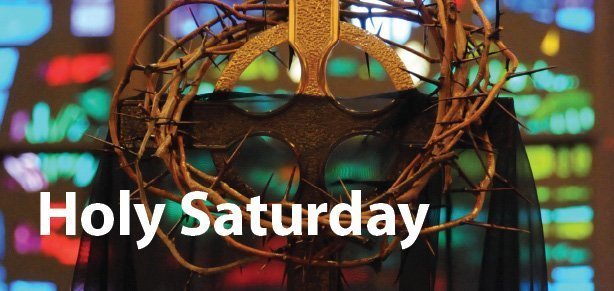
Catholic Churches all over the world are empty of the Savior today. There is no red Sanctuary light. The Tabernacle is barren of the True Presence. I have not been in Church for a while since my disabilities have become more pronounced; but I recall many times, shaking my head in utter dismay when I watched folks coming into church and genuflecting on Holy Saturday. Some may say that it's just automatic to genuflect before entering the pew. Perhaps ... but then what does that say for when the Light is ON and Jesus IS in the Tabernacle? So many have forgotten the old ways. The TRUTH before it was watered down.
I'm going to take just a little tiny section and expound on it, in hopes it might spark some interest for folks to take it further on their own.
 The sanctuary candle (or lamp) is burned continually in a Catholic or Orthodox
church as a sign of the continual Real Presence of Jesus Christ, Body,
Blood, Soul, and Divinity, under the appearance of the Host (Bread) kept
the Tabernacle (the gold box) in each church building. The candle is a
sign to those who wish to pray that Jesus is truly Present, looking at
each person with love, listening to their prayers, and giving them the
grace needed to deal with the problems of life. The only day of the
liturgical year on which the sanctuary candle is not lit is Holy
Saturday (following Good Friday), when Jesus is removed from the Tabernacle (safely reposed elsewhere until the Easter Vigil) as a reminder to the faithful of His absence when He was in
the tomb after His death on the Cross.
The sanctuary candle (or lamp) is burned continually in a Catholic or Orthodox
church as a sign of the continual Real Presence of Jesus Christ, Body,
Blood, Soul, and Divinity, under the appearance of the Host (Bread) kept
the Tabernacle (the gold box) in each church building. The candle is a
sign to those who wish to pray that Jesus is truly Present, looking at
each person with love, listening to their prayers, and giving them the
grace needed to deal with the problems of life. The only day of the
liturgical year on which the sanctuary candle is not lit is Holy
Saturday (following Good Friday), when Jesus is removed from the Tabernacle (safely reposed elsewhere until the Easter Vigil) as a reminder to the faithful of His absence when He was in
the tomb after His death on the Cross. 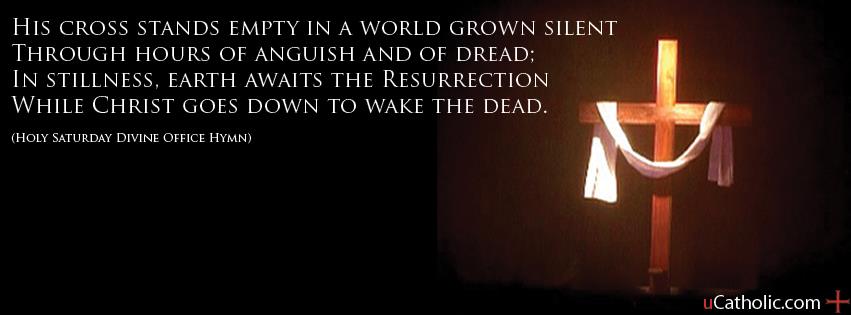
When we enter a Church, the Sanctuary light lets us know that Jesus is truly Present, Body, Blood, Soul and Divinity in the Tabernacle under the guise of Bread (the Consecrated Host). We have seen throughout history many Eucharistic Miracles where the Host has Bled. Several instances of independent labs have stated that it's always the same type of Blood AB+ I believe and where there are Fleshy parts, it's always Heart Tissue. How do scientists in different states and countries come up with the same analysis unbeknownst to each other? Do folks CHOOSE *not* to believe in the True Presence because if they did, they would have to change their lives a bit and maybe let go of some worldly goals?
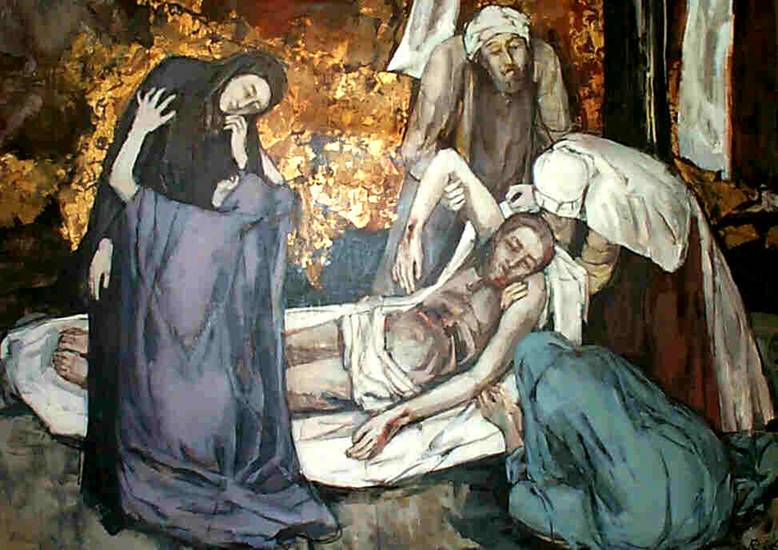 What is the most excellent BEST in the world compared to the least significant of heavenly eternity? It's NOTHING! GARBAGE! But (as they say), I digress. Point is, that we should be MINDFUL of Jesus' Presence and when we genuflect, do so with REVERENCE, as if He WERE sitting on a throne in full view! AND, we should genuflect TOWARDS THE TABERNACLE where HE IS. Bowing our heads as we genuflect (as we should be doing whenever His Precious Name is mentioned) is also desirable. The genuflection should be full with your knee touching the floor (unless of course you are physically disabled ... but even then one can reverently bow the head and make the sign of the Cross).
  was BEAUTIFUL and so profoundly serene. Of everything I can no longer do, this is what I miss the most. Still, I have sometimes asked Jesus to take a little piece of my heart to place in every Tabernacle of the world to console Him in His lonely prison when He's left unattended. Just as Jesus said to Peter, James and John in the Garden ... "Could you not watch with Me one hour?" We seem to have time for everything else in life ... even for foolishness! Yet, so often Jesus waits patiently for someone to come asking for His grace, keeping Him company, sharing their love with Him ~ frequently to no avail. THE best time you will ever spend on earth will be keeping Jesus company in the Tabernacle!
We say we love our Jesus ... we acknowledge He died a cruel torturous
death for our salvation; yet we don't take time to really learn and
study and PRAY to know Him better and love Him more? We spend more time
planning a vacation or devote our time to a hobby or recreation. Think
about this, really. All things of the earth are passing before our eyes.
Jesus gave ALL He had to bring us eternal life with the Trinity in a
place that we can't even conceive of the beauty! How IS it we put Him on
the back burner most if not all of the time?
So please ... when you enter a Church, know what the Sanctuary lamp is there for ... look for the Tabernacle and genuflect as if Jesus was seated on His Throne before you. Then talk to HIM .. not your neighbors. He's there for YOU ... please be there for HIM.
So on Holy Saturday, no need to genuflect before entering the pew
.... when the light is out, there's No One home.
.... when the light is out, there's No One home.

Friday, March 25, 2016
March 25: The Alpha and the Omega ~ Not this way again for 141 years
"Good Friday and the Feast of the Annunciation will not fall on the same day again for 141 years. The Beginning and the End. It's the Jubilee Year of MERCY. Coincidence? You decide."
 This week is the holiest week of the year. Through the Passion, suffering, death and resurrection of Our Blessed Lord, the curse of Adam is undone. Our Lord provides the path to salvation through the cross so that we are no longer permanent exiles from Paradise. This year, however, a rare convergence of holy days affords an added perspective. This year, Good Friday falls on March 25, which is the feast of the Annunciation. From the year 1900 until this year, the Annunciation and Good Friday have converged only five times, 1910, 1921, 1932, 2005 and will happen again this year. After this year, however, these two holy days will not converge again for another 141 years. This is the longest stretch of time where those two holy days will not converge since at least as far back as the year 1700. While the stretch of time may not be of any consequence, it is interesting to think about, especially considering these two feasts will not coincide again within our lifetimes.

With Good Friday falling on the same day as the Annunciation, we can easily recall our Blessed Lord’s words to John in the Book of Revelation, “I am the Alpha and the Omega, the first and the last, the beginning and the end.” In witnessing the Annunciation on the same day as the crucifixion, we have an opportunity to contemplate the fullness of the Incarnation as it is consummated in a single day. And it’s no mere coincidence that brings these two holy days together.
St. Augustine tells us in the fifth chapter of Book 4 of his work titled, “On the Trinity”:
This past Sunday was the first day of spring. If we consider the first day of spring to be a reflection of the first day of creation, as new life replaces the deathly sleep of winter, then we can likewise consider the six days of creation from that first day of spring. And if we consider this past Sunday to be the first day of creation, an amazing thing happens as the sixth day of creation falls also on March 25. And according to the Golden Legend by Archbishop Jacobus de Voraigne of Genoa, believed to have been published in 1260, that concurrence also is no mere coincidence:
 This blessed Annunciation happened the twenty fifth day of the month of March, on which day happened also, as well tofore as after, these things that hereafter be named. On that same day Adam, the first man, was created and fell into original sin by inobedience, and was put out of paradise terrestrial. After, the angel showed the conception of our Lord to the glorious Virgin Mary. Also that same day of the month Cain slew Abel his brother. Also Melchisedech made offering to God of bread and wine in the presence of Abraham. Also on the same day Abraham offered Isaac his son. That same day S. John Baptist was beheaded, and S. Peter was that day delivered out of prison, and S. James the more, that day beheaded of Herod. And our Lord Jesus Christ was on that day crucified, wherefore that is a day of great reverence.
The intimate connection between the Incarnation and death of Our Lord and the creation and subsequent fall of Adam is undeniable. But to consider that they truly could have taken place on the same exact day is extraordinarily remarkable.
This blessed Annunciation happened the twenty fifth day of the month of March, on which day happened also, as well tofore as after, these things that hereafter be named. On that same day Adam, the first man, was created and fell into original sin by inobedience, and was put out of paradise terrestrial. After, the angel showed the conception of our Lord to the glorious Virgin Mary. Also that same day of the month Cain slew Abel his brother. Also Melchisedech made offering to God of bread and wine in the presence of Abraham. Also on the same day Abraham offered Isaac his son. That same day S. John Baptist was beheaded, and S. Peter was that day delivered out of prison, and S. James the more, that day beheaded of Herod. And our Lord Jesus Christ was on that day crucified, wherefore that is a day of great reverence.
The intimate connection between the Incarnation and death of Our Lord and the creation and subsequent fall of Adam is undeniable. But to consider that they truly could have taken place on the same exact day is extraordinarily remarkable.
St. Paul wrote about this connection in his letter to the Romans:
 St. Matthew named the place of Our Lord’s crucifixion in the 27th chapter of his Gospel. He said, “they came to a place called Golgotha (which means Place of the Skull).” According to Jewish tradition, Golgotha was a reference to the final resting place of Adam’s skull. In many artistic depictions, Our Lord’s crucifixion is placed directly above a skull, and so even the location of the Crucifixion of Our Lord took place in relation to Adam’s sin.
Our Blessed Lord said that He is the Alpha and the Omega, the beginning and the end. As St. John so beautifully wrote:

May you have a very blessed Holy Week.
This week is the holiest week of the year. Through the Passion, suffering, death and resurrection of Our Blessed Lord, the curse of Adam is undone. Our Lord provides the path to salvation through the cross so that we are no longer permanent exiles from Paradise. This year, however, a rare convergence of holy days affords an added perspective. This year, Good Friday falls on March 25, which is the feast of the Annunciation. From the year 1900 until this year, the Annunciation and Good Friday have converged only five times, 1910, 1921, 1932, 2005 and will happen again this year. After this year, however, these two holy days will not converge again for another 141 years. This is the longest stretch of time where those two holy days will not converge since at least as far back as the year 1700. While the stretch of time may not be of any consequence, it is interesting to think about, especially considering these two feasts will not coincide again within our lifetimes.With Good Friday falling on the same day as the Annunciation, we can easily recall our Blessed Lord’s words to John in the Book of Revelation, “I am the Alpha and the Omega, the first and the last, the beginning and the end.” In witnessing the Annunciation on the same day as the crucifixion, we have an opportunity to contemplate the fullness of the Incarnation as it is consummated in a single day. And it’s no mere coincidence that brings these two holy days together.
St. Augustine tells us in the fifth chapter of Book 4 of his work titled, “On the Trinity”:
For He is believed to have been conceived on the 25th of March, upon which day also He suffered; so the womb of the Virgin, in which He was conceived, where no one of mortals was begotten, corresponds to the new grave in which He was buried, wherein was never man laid, neither before nor since.
The long-standing tradition of the Church is that Our Lord was actually conceived on March 25, and He was actually crucified on March 25. But when we consider that the Incarnation was a very specific and deliberate promise from God to undo the sin of Adam, there is another element to consider.This past Sunday was the first day of spring. If we consider the first day of spring to be a reflection of the first day of creation, as new life replaces the deathly sleep of winter, then we can likewise consider the six days of creation from that first day of spring. And if we consider this past Sunday to be the first day of creation, an amazing thing happens as the sixth day of creation falls also on March 25. And according to the Golden Legend by Archbishop Jacobus de Voraigne of Genoa, believed to have been published in 1260, that concurrence also is no mere coincidence:
This blessed Annunciation happened the twenty fifth day of the month of March, on which day happened also, as well tofore as after, these things that hereafter be named. On that same day Adam, the first man, was created and fell into original sin by inobedience, and was put out of paradise terrestrial. After, the angel showed the conception of our Lord to the glorious Virgin Mary. Also that same day of the month Cain slew Abel his brother. Also Melchisedech made offering to God of bread and wine in the presence of Abraham. Also on the same day Abraham offered Isaac his son. That same day S. John Baptist was beheaded, and S. Peter was that day delivered out of prison, and S. James the more, that day beheaded of Herod. And our Lord Jesus Christ was on that day crucified, wherefore that is a day of great reverence.St. Paul wrote about this connection in his letter to the Romans:
Therefore, just as through one person sin entered the world, and through sin, death, and thus death came to all, inasmuch as all sinned—for up to the time of the law, sin was in the world, though sin is not accounted when there is no law. But death reigned from Adam to Moses, even over those who did not sin after the pattern of the trespass of Adam, who is the type of the one who was to come.
But the gift is not like the transgression. For if by that one person’s transgression the many died, how much more did the grace of God and the gracious gift of the one person Jesus Christ overflow for the many. And the gift is not like the result of the one person’s sinning. For after one sin there was the judgment that brought condemnation; but the gift, after many transgressions, brought acquittal.
For if, by the transgression of one person, death came to reign through that one, how much more will those who receive the abundance of grace and of the gift of justification come to reign in life through the one person Jesus Christ.
In conclusion, just as through one transgression condemnation came upon all, so through one righteous act acquittal and life came to all.

In this one passage, we can see that the Passion, Death and Resurrection of Our Lord is an undoing of the sin of Adam. And when you think of the creation and expulsion of Adam taking place on the same day as the conception and crucifixion of Our Lord, so many more parallels begin to emerge:- When Adam and Eve sinned, they were expelled from a garden. Our Lord’s passion began in the Garden of Olives.
- After Adam’s sin was discovered, God told him that by the sweat of his brow shall he eat bread. In the Garden of Olives, Our Lord perspired a sweat of blood in order to give us His Body, which He called the Bread of Life.
- God cursed the ground and told Adam that “thorns and thistles it shall bear for you.” After Our Lord was arrested, He bore a crown of thorns upon His head.
- In the Garden of Eden, Adam ate the fruit of a tree which brought about death. In Jerusalem, Our Blessed Lord carried a dead tree on a path to Calvary.
- In the Garden, God took a rib from Adam’s side while he slept to create Eve. On the cross, after Our Lord gave up His spirit in the sleep of death, a lance pierced His side, and from the flowing blood and waters came His mystical Bride, the Church.
- When Adam and Eve were expelled from the Garden of Eden, God denied them access to the Tree of Life. At Golgotha, Our Lord’s crucifix became the new Tree of Life, and His Body and Blood became its fruit.
- Through Adam, death entered the world. Through Our Lord’s death and resurrection, eternal life became possible for man.
St. Matthew named the place of Our Lord’s crucifixion in the 27th chapter of his Gospel. He said, “they came to a place called Golgotha (which means Place of the Skull).” According to Jewish tradition, Golgotha was a reference to the final resting place of Adam’s skull. In many artistic depictions, Our Lord’s crucifixion is placed directly above a skull, and so even the location of the Crucifixion of Our Lord took place in relation to Adam’s sin.Our Blessed Lord said that He is the Alpha and the Omega, the beginning and the end. As St. John so beautifully wrote:
In the beginning was the Word,
and the Word was with God,
and the Word was God.
and the Word was with God,
and the Word was God.
He was in the beginning with God.
All things came to be through him,
and without him nothing came to be.
What came to be
through him was life,
and this life was the light of the human race;
the light shines in the darkness,
and the darkness has not overcome it.
Our Lord was there in the Garden with Adam. He created Adam and gave him life. Our Lord was with him when he sinned, and He was with him when he was expelled. The sentence of death was spoken by Our Blessed Lord’s own lips, but in His infinite Mercy, He offered Himself in Adam’s place so that we may have eternal life with Him.and without him nothing came to be.
What came to be
through him was life,
and this life was the light of the human race;
the light shines in the darkness,
and the darkness has not overcome it.

May you have a very blessed Holy Week.
Thursday, March 10, 2016
St. Joseph Novena - begins March 10th

 Saint Joseph, you are the faithful protector and intercessor of all
who love and venerate you. You know that I have confidence in you and
that, after Jesus and Mary, I come to you as an example for holiness,
for you are especially close with God. Therefore, I humbly commend
myself, with all who are dear to me and all that belong to me, to your
intercession. I beg of you, by your love for Jesus and Mary, not to
abandon me during life and to assist me at the hour of my death.
Saint Joseph, you are the faithful protector and intercessor of all
who love and venerate you. You know that I have confidence in you and
that, after Jesus and Mary, I come to you as an example for holiness,
for you are especially close with God. Therefore, I humbly commend
myself, with all who are dear to me and all that belong to me, to your
intercession. I beg of you, by your love for Jesus and Mary, not to
abandon me during life and to assist me at the hour of my death.Glorious Saint Joseph, spouse of the Immaculate Virgin, pray for me to have a pure, humble, charitable mind, and perfect resignation to the divine Will. Be my guide, my father, and my model through life that I may die as you did in the arms of Jesus and Mary.
Loving Saint Joseph, faithful follower of Jesus Christ, I raise my heart to you to implore your powerful intercession in obtaining from the Divine Heart of Jesus all the graces necessary for my spiritual and temporal welfare, particularly the grace of a happy death, and the special grace I now implore:
(Mention your request)
Guardian of the Word Incarnate, I feel confident that your prayers on my behalf will be graciously heard before the throne of God.
Day 1 – St. Joseph Most Just, Pray for us!
Day 2 – St. Joseph Most Prudent, Pray for us!
Day 3 – St. Joseph Most Loving Husband, Pray for us!
Day 4 – St. Joseph Most Strong, Pray for us!
Day 5 – St. Joseph Most Obedient, Pray for us!
Day 6 – St. Joseph Most Faithful, Pray for us!
Day 7 – St. Joseph Pillar of Families, Pray for us!
Day 8 – St. Joseph Patron of the Dying, Pray for us!
Day 9 – St. Joseph Terror of Demons, Pray for us!
Amen.
Glory be to the Father and to the Son and to the Holy Spirit, as it was in the beginning, is now and ever shall be, world without end.
Amen.


Saturday, March 5, 2016
Concerning Islam
 People in all cultures reach out to God – usually in the way they are taught. It is instinctive to us to want to know, love and serve our Creator. Most people, even if errant, are sincere in that desire. We are all embedded with a desire for the good, as well. To care for each other, love our neighbor…so we have tools to approach the throne of God even if our basic knowledge and wisdom is deficient.
Most Muslims, like other peoples, want to reach out to God…and do so in the way they were taught. Most would like to do so without the bloodshed, coercion and oppression. In fact, I suspect that many Muslims who emigrated to America over the years came specifically because they wanted to reach out to God in a way that was familiar to them, but without the violence and oppression. America, a land that guaranteed human rights, must have seemed the perfect place to do that. But America betrayed them. In America rose a toxic notion of tolerance, a notion that first enabled, then celebrated and favored cultural practices that were inimical to the values of freedom. This new American “tolerance” empowered the very brutes those Muslims came to escape – and all in the name of tolerance.
Up until 9-11, I considered Islam one of the three great monotheistic religions. It was not the actions of the terrorists that roused my suspicions, but the silence or obfuscation of the rest of Islam on the matter. If a group of Catholics had done that, I knew my Church would immediately rise in righteous anger to denounce the terrorists, to condemn them and proclaim excommunication on any who adopted such poisonous doctrines contrary to the faith. That did not happen with Islam. About the best they could muster was the “street-gang” defense: “It wasn’t us.” – denying personal responsibility while remaining ambivalent – and often excusing – the act.
To be sure, the Hadith are important in Islam. These are commentaries written after the Koran, by various Islamic scholars, purporting to give additional words of Muhammed not included in the Koran. Some of those scholars made attempts to try to soften the clear homicidal bent of the Koran towards non-Muslims. Yet the Koran remains – and it is binding, no matter how much some of the Hadith tries to square the circle.
The great Christian writer and historian, Hilaire Belloc, argued that Islam is not a unique religion at all, but a singularly perverse Christian heresy. Belloc was an occasional collaborator with G.K. Chesterton and was president, for a time, of the Oxford Union. While I think his case is somewhat overstated, it carries deep insight into the historical phenomenon which is Islam. Certainly Islam recognizes but one God, emphasizes that man is to serve him, and posits an afterlife. Other than that, the differences are more striking than the similarities.
 |
| Lepanto: The Battle that Saved Europe - click for story |
G.K. Chesterton once said that the man who is intellectually serious about his faith must “either ascend into Catholicism or descend into disbelief.” While that may be overstated, too, it presumes that a man starts from a spark of truth to begin his inquiries. If your image of God is not as Father, as the source of good, but instead as a demanding, petulant murderer, you are severely handicapped in your search. I have said – and maintain – that most Muslims honestly want to know, to love and to serve God in peace with their fellows. I have also said – and maintain – that Islam, itself, is a satanic deception. In that sense, Belloc is absolutely right that it is one of the greatest of the heresies.
Our challenge then is to evangelize Muslims where we can and defeat Islam where we cannot. Christians can be terribly naieve. We think we have been at peace with Islam for much of the last few centuries, with some sporadic hostilities. We have not. Islam’s aim has always been to conquer the world and wipe out any remnants who will not convert. It has occasionally been engaged in strategic armistices with the west, but has been at war with it since late in Muhammed’s life. Ultimately, it will only accept victory or death.
I never propose that Christians should act with coercive aggression, even with Islam. If an Islamic nation is willing to live within its borders and maintain peace with its neighbors, it should be left alone. But the robust vigor of St. Joan of Arc and the best of the Christian Crusaders is my model for how Christians should behave in defending their faith and lands against military assault. Understand that Islam is starkly different than Christianity in how it defines the role of the state and the citizen to religion. In Christianity, individual conscience is respected. The state is expected to act justly, according to transcendent principles that guard human liberty. In Islam, religion, politics and ideology are inextricably entwined. There is no freedom of conscience, only religious rules that must be ruthlessly imposed in all walks of life.
 I see myself quoted frequently as saying that Our Lady of Tepeyac is going to convert the Muslims en masse. That is true, but only half of what I have said about the matter. I say that Our Lady will, indeed, convert Islam, mainly through its women, but not until we in the west confront it seriously, both militarily and intellectually. Then it will collapse on itself quicker and more easily than anyone can imagine.
All democracies before America ultimately degenerated into chaos, then dictatorship. Because of our success, we have completely lost sight that democracy is one of the most unstable forms of government ever devised. The genius of the founders was primarily in introducing stabilizing elements into the mix, elements that we have systematically and slowly dismantled over the last century or so. The system I would adopt presupposes at least a temporary absolutism. We are headed in that direction. Pray that whoever the absolutist leader is is committed to faith, family and freedom – and that after clearing away the cultural, ideological and structural brush and deadwood that has accumulated, he will return to us a system that is based on our foundational principles.
This is what I would do:
- Declare America formally a Judeo-Christian country that is open and tolerant to all people of goodwill, whatever their faith. No unit of government and no official can ban public or private displays and expressions of Christian or Jewish faith. No institution shall coerce any non-Christian into participation of public expressions.
- Do not allow Islamic terrorists to hide behind human shields in their own countries any more. Protect civilians in hostile zones by giving them frequent warnings that if terrorists have embedded themselves among them, they need to eject them or get out – because we are coming.
- Forget about notions of proportionality. If hostile powers insist on targeting the west or western citizens, the only acceptable solution is their unconditional surrender or their destruction. Continue pounding them until one or the other has been accomplished.
- Send FBI agents to watch over every mosque in the country. If worshippers do not incite violence, leave them be. If they do, shut them down. In the 50s and 60s, some racial supremacists used churches as cover for their nefarious schemes. The FBI shut down such covers while respecting the right of innocents to worship. We have a much larger, malignant force using some mosques as cover. End it.
- Sharia law is incompatible with freedom and American principles. Outlaw it throughout the country. Remove it root and branch anywhere it appears. Deport any who scream about it.
- A false dualism has arisen over the matter of refugees. Taking them in here or leaving them to die are not our only options. We have had such situations before – and in the Middle East. We can work to set up refugee camps in the Middle East to receive and house the refugees without endangering our population in a time of war. If that is not sufficient, we can find geographic locations elsewhere where western citizens are not endangered and then commit to humanitarian assistance.
By Charlie Johnston
Subscribe to:
Posts (Atom)