Thursday, August 20, 2015

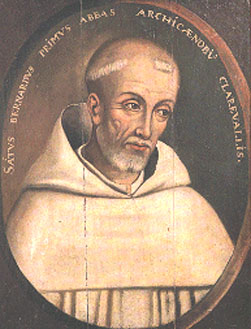
St. Bernard of Clairvaux

Born: 1090
Birthplace: Fontaine-les-Dijon, Burgundy, France
Died: 20-Aug-1153
Location of death: Clairvaux, Champagne, France
Cause of death: unspecified
Gender: Male
Religion: Roman Catholic
Race or Ethnicity: White
Occupation: Religion
Nationality: France
Executive summary: Reformed the Cistercian Order


St. Bernard, Abbot of Clairvaux one of the most illustrious preachers and monks of the middle ages, was born at Fontaines, near Dijon, in France. His father, a knight named Tecelin, perished on crusade; and his mother Aleth, a daughter of the noble house of Mon-Bar, and a woman distinguished for her piety, died while Bernard was yet a boy. The lad was constitutionally unfitted for the career of arms, and his own disposition, as well as his mother's early influence, directed him to the church. His desire to enter a monastery was opposed by his relations, who sent him to study at Châlons in order to qualify for high ecclesiastical preferment. Bernard's resolution to become a monk was not, however, shaken, and when he at last definitely decided to join the community which Robert of Molesmes had founded at Citeaux in 1198, he carried with him his brothers and many of his relations and friends. The little community of reformed Benedictines, which was to produce so profound an influence on Western monachism and had seemed on the point of extinction for lack of novices, gained a sudden new life through this accession of some thirty young men of the best families of the neighborhood. Others followed their example; and the community grew so rapidly that it was soon able to send off offshoots. One of these daughter monasteries, Clairvaux, was founded in 1115, in a wild valley branching from that of the Aube, on land given by Count Hugh of Troyes, and of this Bernard was appointed abbot.

By the new constitution of the Cistercians Clairvaux became the chief monastery of the five branches into which the order was divided under the supreme direction of the abbot of Citeaux. Though nominally subject to Citeaux, however, Clairvaux
soon became the most important Cistercian house, owing to the fame and influence of Bernard. His saintly character, his self-mortification -- of so severe a character that his friend, William of Champeaux, bishop of Châlons, thought it right to remonstrate with him -- and above all, his marvellous power as a preacher, soon made him famous, and drew crowds of pilgrims to Clairvaux. His miracles were noised abroad, and sick folk were brought from near and far to be healed by his touch. Before long the abbot, who had intended to devote his life to the work of his monastery, was drawn into the affairs of the great world. When in 1124 Pope Honorius II mounted the chair of St. Peter, Bernard was already reckoned among the greatest of French churchmen; he now shared in the most important ecclesiastical discussions, and papal legates sought his counsel. Thus in 1128 he was invited by Cardinal Matthew of Albano to the synod of Troyes, where he was instrumental in obtaining the recognition of the new order of Knights Templars, the rules of which he is said to have drawn up; and in the following year, at the synod of Châlons-sur-Marne, he ended the crisis arising out of certain charges brought against Henry, Bishop of Verdun, by persuading the bishop to resign. The European importance of Bernard, however, began with the death of Pope Honorius II (1130) and the disputed election that followed. In the synod convoked by Louis the Fat at Étampes in April 1130 Bernard successfully asserted the claims of Pope Innocent II against those of Anacletus II, and from this moment became the most influential supporter of his cause. He threw himself into the contest with characteristic ardor. While Rome itself was held by Anacletus, France, England, Spain and Germany declared for Innocent, who, though banished from Rome, was -- in Bernard's phrase -- "accepted by the world." The pope travelled from place to place, with the powerful abbot of Clairvaux at his side; he stayed at Clairvaux itself, humble still, so far as its buildings were concerned; and he went with Bernard to parley with the emperor Lothair III at Liége.

In 1133, the year of the emperor's first expedition to Rome, Bernard was in Italy persuading the Genoese to make peace with the men of Pisa, since the pope had need of both. He accompanied Innocent to Rome, successfully resisting the proposal to reopen negotiations with Anacletus, who held the castle of Sant' Angelo and, with the support of Roger of Sicily, was too strong to be subdued by force. Lothair, though crowned by Innocent in St. Peter's, could do nothing to establish him in the Holy See so long as his own power was sapped by his quarrel with the house of Hohenstaufen. Again Bernard came to the rescue; in the spring of 1135 he was at Bamberg successfully persuading Frederick of Hohenstaufen to submit to the emperor. In June he was back in Italy, taking a leading part in the council of Pisa, by which Anacletus was excommunicated. In northern Italy the effect of his personality and of his preaching was immense; Milan itself, of all the Lombard cities most jealous of the imperial claims, surrendered to his eloquence, submitted to Lothair and to Innocent, and tried to force Bernard against his will into the vacant see of St. Ambrose. In 1137, the year of Lothair's last journey to Rome, Bernard was back in Italy again; at Monte Cassino, setting the affairs of the monastery in order, at Salerno, trying in vain to induce Roger of Sicily to declare against Anacletus, in Rome itself, agitating with success against the antipope. Anacletus died on the 25th of January 1138; on the 13th of March the cardinal Gregory was elected his successor, assuming the name of Victor. Bernard's crowning triumph in the long contest was the abdication of the new antipope, the result of his personal influence. The schism of the church was healed, and the abbot of Clairvaux was free to return to the peace of his monastery.

Clairvaux itself had meanwhile (1135-36) been transformed outwardly -- in spite of the reluctance of Bernard, who preferred the rough simplicity of the original buildings -- into a more suitable seat for an influence that overshadowed that of Rome itself. How great this influence was is shown by the outcome of Bernard's contest with Peter Abelard. In intellectual and dialectical power the abbot was no match for the great schoolman; yet at Sens in 1141 Abelard feared to face him, and when he appealed to Rome Bernard's word was enough to secure his condemnation.

One result of Bernard's fame was the marvellous growth of the Cistercian order. Between 1130 and 1145 no less than ninety-three monasteries in connection with Clairvaux were either founded or affiliated from other rules, three being established in England and one in Ireland. In 1145 a Cistercian monk, once a member of the community of Clairvaux -- another Bernard, abbot of Aquae Silviae near Rome, was elected pope as Eugenius III. This was a triumph for the order; to the world it was a triumph for Bernard, who complained that all who had suits to press at Rome applied to him, as though he himself had mounted the chair of St. Peter.

Having healed the schism within the church, Bernard was next called upon to attack the enemy without. Languedoc especially had become a hotbed of heresy, and at this time the preaching of Henry of Lausanne was drawing thousands from the orthodox faith. In June 1145, at the invitation of Cardinal Alberic of Ostia, Bernard travelled in the south, and by his preaching did something to stem the flood of heresy for a while. Far more important, however, was his activity in the following year, when, in obedience to the pope's command, he preached a crusade. The effect of his eloquence was extraordinary. At the great meeting at Vezelay, on the 21st of March, as the result of his sermon, Louis VII of France and his queen, Eleanor of Guienne, took the cross, together with a host of all classes, so numerous that the stock of crosses was soon exhausted; Bernard next travelled through northern France, Flanders and the Rhine provinces, everywhere rousing the wildest enthusiasm; and at Spires on Christmas Day he succeeded in persuading Conrad, king of the Romans, to join the crusade.

The lamentable outcome of the movement was a hard blow to Bernard, who found it difficult to understand this manifestation of the hidden counsels of God, but ascribed it to the sins of the crusaders. The news of the disasters to the crusading host first reached Bernard at Clairvaux, where Pope Eugenius, driven from Rome by the revolution associated with the name of Arnold of Brescia, was his guest. Bernard had in March and April 1148 accompanied the pope to the council of Reims, where he led the attack on certain propositions of the scholastic theologian Gilbert de la Porrée. From whatever cause -- whether the growing jealousy of the cardinals, or the loss of prestige owing to the rumored failure of the crusade, the success of which he had so confidently predicted -- Bernard's influence, hitherto so ruinous to those suspected of heterodoxy, on this occasion failed of its full effect. On the news of the full extent of the disaster that had overtaken the crusaders, an effort was made to retrieve it by organizing another expedition. At the invitation of Suger, abbot of St. Denis, now the virtual ruler of France, Bernard attended the meeting of Chartres convened for this purpose, where he himself was elected to conduct the new crusade, the choice being confirmed by the pope. He was saved from this task, for which he was physically and constitutionally unfit, by the intervention of the Cistercian abbots, who forbade him to undertake it.

Bernard was now ageing, broken by his austerities and by ceaseless work, and saddened by the loss of several of his early friends. But his intellectual energy remained undimmed. He continued to take an active interest in ecclesiastical affairs, and his last work, the De Consideratione, shows no sign of failing power. He died on the 20th of August 1153.

The greatness of St. Bernard lay not in the qualities of his intellect, but of his character. Intellectually he was the child of his
age, inferior to those subtle minds whom the world, fired by his contagious zeal, conspired to crush. Morally he was their superior; and in this moral superiority lay the secret of his power. The age recognized in him the embodiment of its ideal: that of medieval monasticism at its highest development. The world had no meaning for him save as a place of banishment and trial, in which men are but "strangers and pilgrims"; the way of grace, back to the lost inheritance, had been marked out once for all, and the function of theology was but to maintain the landmarks inherited from the past. With the subtleties of the schools he had no sympathy, and the dialectics of the schoolmen quavered into silence before his terrible invective. Yet, within the limits of his mental horizon, Bernard's vision was clear enough. His very life proves with what merciless logic he followed out the principles of the Christian faith as he conceived it; and it is impossible to say that he conceived it amiss. For all his overmastering zeal he was by nature neither a bigot nor a persecutor. Even when he was preaching the crusade he interfered at Mainz to stop the persecution of the Jews, stirred up by the monk Radulf. As for heretics, "the little foxes that spoil the vines", these "should be taken, not by force of arms, but by force of argument", though, if any heretic refused to be thus taken, he considered "that he should be driven away, or even a restraint put upon his liberty, rather than that he should be allowed to spoil the vines." He was evidently troubled by the mob violence which made the heretics "martyrs to their unbelief." He approved the zeal of the people, but could not advise the imitation of their action, "because faith is to be produced by persuasion, not imposed by force"; adding, however, in the true spirit of his age and of his church, "it would without doubt be better that they should be coerced by the sword than that they should be allowed to draw away many other persons into their error." Finally, oblivious of the precedent of the Pharisees, he ascribes the steadfastness of these "dogs" in facing death to the power of the devil.

This is Bernard at his worst. At his best -- and, fortunately, this is what is mainly characteristic of the man and his writings -- he displays a nobility of nature, a wise charity and tenderness in his dealings with others, and a genuine humility, with no touch of servility, that make him one of the most complete exponents of the Christian life. His broadly Christian character is, indeed, witnessed to by the enduring quality of his influence. The author of the Imitatio drew inspiration from his writings; the reformers saw in him a medieval champion of their favorite doctrine of the supremacy of the divine grace; his works, down to the present day, have been reprinted in countless editions. This is perhaps due to the fact that the chief fountain of his own inspiration was the Bible. He was saturated in its language and in its spirit; and though he read it, as might be expected, uncritically, and interpreted its plain meanings allegorically -- as the fashion of the day was -- it saved him from the grosser aberrations of medieval Catholicism. He accepted the teaching of the church as to the reverence due to our Lady and the saints, and on feast-days and festivals these receive their due meed in his sermons; but in his letters and sermons their names are at other times seldom invoked. They were overshadowed completely in his mind by his idea of the grace of God and the moral splendor of Christ; "from Him do the Saints derive the odor of sanctity; from Him also do they shine as lights."

The cause of Bernard's extraordinary popular success as a preacher can only imperfectly be judged by the sermons that survive. These were all delivered in Latin, evidently to congregations more or less on his own intellectual level. Like his letters, they are full of quotations from and reference to the Bible, and they have all the qualities likely to appeal to men of culture at all times. "Bernard", wrote Erasmus in his Art of Preaching, "is an eloquent preacher, much more by nature than by art; he is full of charm and vivacity and knows how to reach and move the affections." The same is true of the letters and to an even more striking degree. They are written on a large variety of subjects, great and small, to people of the most diverse stations and types; and they help us to understand the adaptable nature of the man, which enabled him to appeal as successfully to the unlearned as to the learned.

Bernard's works fall into three categories: (1) Letters, of which over five hundred have been preserved, of great interest and value for the history of the period. (2) Treatises: (a) dogmatic and polemical, De gratia et libero arbitrio, written about 1127, and following closely the lines laid down by St. Augustine; De baptismo aliisque quaestionibus ad mag. Hugonem de S. Victore; Contra quaedam capitala errorum Abaelardi ad Innocentem II (in justification of the action of the synod of Sens); (b) ascetic and mystical, De gradibus humilitatis et superbiae, his first work, written perhaps about 1121; De diligendo Deo (about 1126); De conversione ad clericos, an address to candidates for the priesthood; De Consideratione, Bernard's last work, written about 1148 at the pope's request for the edification and guidance of Eugenius III; (c) about monasticism, Apologia ad Guilelmum, written about 1127 to William, abbot of St. Thierry; De laude novae militiae ad milites templi (c. 1132-36); De precepto et dispensatione, an answer to various questions on monastic conduct and discipline addressed to him by the monks of St. Peter at Chartres (some time before 1143); (d) on ecclesiastical government, De moribus et officio episcoporum, written about 1126 for Henry, Bishop of Sens; the De Consideratione mentioned above; (e) a biography, De vita et rebus gestis S. Maiachiae, Hiberniae episcopi, written at the request of the Irish abbot Congan and with the aid of materials supplied by him; it is of importance for the ecclesiastical history of Ireland in the 12th century; (f) sermons -- divided into Sermones de tempore; de sanctis; de diversis; and eighty-six sermons, in Cantica Canticorum, an allegorical and mystical exposition of the Song of Solomon; (g) hymns. Many hymns ascribed to Bernard survive, e.g. Jesu dulcis memoria, Jesus rex admirabilis, Jesu decus angelicum, Salve caput cruentatum. Of these the three first are included in the Roman breviary. Many have been translated and are used in Protestant churches.

Saturday, August 1, 2015

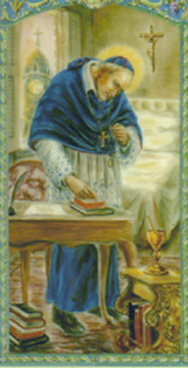
St. Alphonsus - Feastday: August 1

St. Alphonsus was born in the village of Marianella near Naples, Italy, September 27, 1696. At a tender age his pious mother inspired him with the deepest sentiments of piety. The education he received under the auspices of his father, aided by his own intellect, produced in him such results that at the early age of sixteen, he graduated in law. Shortly after, he was admitted to the Neopolitan bar. In 1723, he lost a case, and God made use of his disappointment to wean his heart from the world. In spite of all opposition he now entered the ecclesiastical state. In 1726, he was ordained a priest. He exercised the ministry at various places with great fruit, zealously laboring for his own sanctification. In 1732, God called him to found the Congregation of the Most Holy Redeemer, with the object of laboring for the salvation of the most abandoned souls. Amid untold difficulties and innumerable trials, St. Alphonsus succeeded in establishing his Congregation, which became his glory and crown, but also his cross. The holy founder labored incessantly at the work of the missions until, about 1756, he was appointed Bishop of St. Agatha, a diocese he governed until 1775, when broken by age and infirmity, he resigned this office to retire to his convent where he died. Few saints have labored as much, either by word or by writing, as St. Alphonsus. He was a prolific and popular author, the utility of whose works will never cease. His last years were characterized by intense suffering, which he bore with resignation, adding voluntary mortifications to his other pains. His happy death occurred at Nocera de Pagani, August 1, 1787.


Do you or someone you know suffer from the pain of arthritis? St. Alphonsus Maria Liguori, founder of the Redemptorists, knows that pain. He himself suffered from severe arthritis for the last forty years of his life. The disease left him permanently bent forward and confined to a wheelchair. Upon his canonization, he was declared one of the patron saints of arthritis sufferers.
To celebrate St. Alphonsus’ feast day, August 1, I and my fellow Redemptorists are offering our 6th Annual Blessing for Arthritis Sufferers.
You are invited to take part. I and my fellow Redemptorists want to pray for you, particularly on this special day in our shared heritage. The blessing is available here as a video, and many Redemptorist parishes worldwide will also be offering it in person.

Dear St. Alphonsus, friend of the poor, and arthritis sufferer, you are the special patron of all who suffer from arthritis and the pains of many years. When our joints, hips, arms, legs and knuckles hurt so much that tears well up in our eyes, help us to recall the tears, the sweat and the blood that flowed from our crucified Jesus who bore so much suffering out of love for each of us. St. Alphonsus, afflicted with curvature of the spine and nailed to a wheelchair cross in your final years, teach us to unite all our pains with those of Jesus, so our patience and love inspires others to accept the difficulties of their lives. We ask you to intercede for us so our pains will be eased but more so that we are enabled to be one with Jesus in his great act of dying and rising. Amen.
As St. Alphonsus wrote in his timeless classic, The Glories of Mary, “Pray for me, Mary; pray and never cease to pray until you greet me in Heaven. There I shall possess my God forever. There too I shall possess my dearest Mother. Amen!”


Prayer to Saint Alphonsus Liguori, Patron Saint of Arthritis Sufferers
Dear St. Alphonsus, friend of the poor, and arthritis sufferer, you are the special patron of all who suffer from arthritis and the pains of many years.

When our joints, hips, arms, legs and knuckles hurt so much that tears well up in our eyes, help us to recall the tears, the sweat and the blood that flowed from our crucified Jesus who bore so much suffering out of love for each of us.

St. Alphonsus, afflicted with curvature of the spine and nailed to a wheelchair cross in your final years, teach us to unite all our pains with those of Jesus, so our patience and love inspires others to accept the difficulties of their lives.

We ask you to intercede for us so our pains will be eased but more so that we are enabled to be one with Jesus in his great act of dying and rising. Amen.

Thursday, July 30, 2015

Will The Protestant House of Cards Come Tumbling Down?

Martin Luther burns the Papal bull in the square of Wittenberg in the
year 1520. Oil Painting on Canvas by Karl Aspelin 1857-1922
By now we should all know what happened last week on June 26, 2015, a date that will live in infamy. Five Supreme Court justices violated their oath of office and invented a 'right' out of thin air, overturning constitutional amendments in various states, which were voted on by the people with overwhelming majorities, imposing upon every state and all Americans, same-sex 'marriage' as the law of the land. The implications of this are staggering.

The minority opinions written by the dissenting justices were no less historic. They heralded the end of American democracy and the rise of persecution for Christians who oppose this judicial fiat. The news media and Internet are filled with commentary on this decision, so I will not go into it in detail here. I will say only this. This third branch of government, headed by the United States Supreme Court, has historically been the most tyrannical branch of government in the failed American political system. It was this branch of government that gave us Dred Scott; a horribly bad decision that contributed greatly to the first fall of the American Republic in what is commonly called the Civil War. It was this branch of government that also gave us Engel v. Vitale, and Abington School District v. Schempp, which made prayer and reading the Bible in public schools illegal. It was this branch of government that gave us Roe v. Wade, which usurped state laws and constitutions, making the wholesale slaughter of unborn babies a 'protected legal right'. Fifty-seven million dead babies later, the Supreme Court of the United States gives us this.

In Obergefell v. Hodges, the Supreme Court proved once again that there are no limits to the tyranny of moral relativism it can impose on the American people. In regards to the failed American political system I will say only this. King George III in all of his imperial majesty could have never imagined a tyranny like this. What Americans have created by their own hands is a thousand times worse than any tyranny England ever dished out on the original thirteen colonies. Our state constitutions have just been nullified. Our state laws have just been obliterated. The Supreme Court of the United States has just demonstrated, yet once again, that it will erase any law, overturn any vote, nullify any democratic process, and thwart the will of any people that five of their nine justices don't particularly like. King George III was a gentle and kind ruler compared to this. That however, is not what this essay is about. I will leave the failed American political system to my fellow countrymen. If they wish to try to save it with another constitutional convention (Convention of States), than let them rise up and do it. I will support them. If they wish to let it crumble into the ash heap of history's failed ideas, that too is their choice. I will not stop them. For this essay, however, I have something much more significant to address.

As a former Evangelical Protestant, I can attest that there are certain Protestant individuals who will never cave in to the homosexualist agenda. I can think of my parents and sisters as examples of this. They will never cave in. I have many Evangelical friends who will never cave in either. My question is; where will they go however, when there are no Evangelical churches left to support them in this? For now, most of them are safe, but not for much longer.

(Reuters) -- Evangelicals are starting to change their minds about gay marriage. In recent months, three large evangelical churches — EastLakeCommunity Church in Seattle, Washington, GracePointe Church in Nashville, Tennessee, and City Church in San Francisco, California — have announced that they no longer believe all same-sex relationships are sinful. Leading evangelical ethicist David Gushee changed his position on the issue in a landmark speech last fall, and celebrated pastor Campolo did the same in a statement on his website earlier this month.

This new pro-gay movement among evangelicals is still a minority, and staunch conservatives have been pushing back. But bit by bit, the number of American evangelicals who support marriage equality continues to rise...
read more
You see, Protestantism (for the most part) has had it pretty good for the last five-hundred years since its birth in the sixteenth century. Granted it had a few bouts with the Catholic Church in those early years, but even then, it was supported by a number of governments in Northern Europe. In the English colonies of America, Protestantism enjoyed the support of the state. By the time the United States was founded, Protestantism enjoyed primacy among all religions in North America. The freedoms Protestants have enjoyed under the American political system have allowed for them a great deal of luxury. Schism into multiple sects has always been the primary way Protestants dealt with differences over doctrine and practise. In America, such schisms were so easily accomplished, without state intervention, that literally thousands of denominations and sects have arisen on the North American continent. In all of this however, Protestantism has never encountered a real and serious heresy. Oh sure, there have been little heresies that have arisen here and there, but Protestants mainly deal with this through schism. Some groups have even broken away from Protestantism entirely, but still nothing in the way of real and serious heresy -- until now. When I say real and serious heresy, I'm talking about a cultural heresy that is backed by the full weight and authority of the state, resulting in forms of persecution (mild to severe) of those who do not comply. The United States of America, through the third branch of its failed government (the Supreme Court) has created the legal precedence necessary for such a serious heresy to result in the persecution of those who refuse to comply. The heresy is same-sex 'marriage' and those who refuse to go along with the lie will soon find themselves at the mercy of the state. The heresy has become a popular one in society too, so Christians, who refuse to comply with it, will find no sympathy from the general public. As a result, some Evangelical churches are beginning to cave in. We've seen this among mainline Protestant churches for a long time. They caved into the homosexualist agenda long ago, before there was any public pressure to do so. Many Catholics assumed, perhaps falsely, that no matter what, the Evangelicals will stand with us against the homosexualist agenda. It now appears that we were wrong. The Evangelical mega-churches are falling very quickly now, and I suspect we may see this increase at an exponential rate as persecution ramps up in the months and years ahead.

I am now witnessing this even in conservative Greene County Missouri, as small pockets of Evangelicals are starting to come out in favour of same-sex marriage. Granted, there will always be individual Evangelicals who will never sign on to this, just as there have always been individual mainline Protestants who have refused to cave in. In years past, we saw how these individual mainline Protestants were able to hang together, by breaking with their mainline Protestant denominations, and starting their own offshoots. The Anglican Church in North America serves as one excellent example of this. By breaking with The Episcopal Church of the United States, and the Anglican Church of Canada, individual Anglicans were able to resist the homosexualist agenda, break with their former denominations (schism), and regroup under a new denomination of their own making. This has worked well for them, for now, but I should point out here that Anglicans are a little different than Evangelicals. Anglicans are steeped in liturgical tradition and heritage. It is something that binds them together naturally and organically. This gives them an extra layer of something they hold in common, allowing them to easily unify not just around doctrine, but around tradition as well. For the most part, Evangelicals just don't have this.

Evangelicalism is built primarily around doctrine alone. Its traditions are fluid and relatively new. In many ways, its worship services are often indistinguishable from a Christian music concert, which one can see in any auditorium. When the government comes to take Evangelical church buildings away unless they comply, and it will, what will they do? This will be the first time Protestantism has ever faced any real persecution in North America. Indeed, aside from its bouts with Catholicism it had early on in Europe, this is the first time Protestantism has had to face any kind of real persecution -- ever! Many of these Evangelical mega-churches will cave in. Many Evangelicals will be forced to go underground, and worship as small groups in their homes. What will happen to Evangelicalism then? Without one mega-church pastor to hold them together doctrinally, and without any kind of liturgy or sacraments to bind them together traditionally, what will become of Evangelicalism? Can we expect them to deviate even further on doctrinal issues? Will each small-group become a denomination unto itself? Will Evangelicalism just devolve into some kind of Christianised Individualism? I really don't know the answer to these questions.

What I do know is this. Catholic Christianity will survive this, because we have survived many persecutions before, far worse than this one. We've endured the wrath of Pagan Rome, the Arians, the Muslim Jihadists, Protestant kings and queens, the Communists, the Nazis and now this. They may reduce our numbers. They may cause many apostasies. (Lord knows there are many Catholics more than willing to go, and have already left in heart.) They may take our properties. They may even put us into prison. We, however, have seen all this before. We will outlive them. We will bury their failed system like we buried the once great Roman Empire. Catholic Christianity will not only survive, but it will once again be victorious. Just as it always has throughout history. The Rock of Saint Peter is littered with the hulls of many vessels that have shipwrecked on it. Each had its own captain; Caesar, Arius, Mohammed, Napoleon, Stalin, Hitler, etc. They're all gone now, but the Catholic Church still remains, the Rock of Saint Peter stands tall.

My own decision to leave Protestantism and become Catholic was based on what all of Protestantism is about to undergo. My primary reason for becoming Catholic was over the issue of authority. As I studied to become an Evangelical pastor, it occurred to me that Protestantism has no real authority structure other than what Protestants create by their own hands. They cannot agree with each other, so they literally have hundreds of various authority structures. This should be as no surprise to us. For Protestantism itself was founded in the sixteenth century on a 'personal interpretation of Scripture' (Sola Scriptura) that allowed them to reject the historically established authority of the pope and the hierarchy of the Catholic Church. This in turn led to many reinterpretations over the centuries, resulting in literally thousands of Protestant denominations, affiliations and individual sects. Without any real absolute authority to firmly established doctrine and interpretation of Scripture, what will become of Protestantism in the face of real heresy and real persecution for not following that heresy? Only history will be able to answer that question. For now, however, we are beginning to see the Evangelical mega-churches fall like dominoes. How it ends nobody knows. One thing is certain though. We shall all find out within our lifetimes -- in the very near future.


Shane Schaetzel is an author of Catholic books, and columnist for Christian print magazines and online publications. He is a freelance writer and the creator of 'FullyChristian.Com -- The random musings of a Catholic in the Ozarks.'

Thursday, July 16, 2015

Novena To Our Lady of Mount Carmel - July 16 -


Novena To Our Lady of Mount Carmel


First Day

O Beautiful Flower of Carmel, most fruitful vine, splendor of heaven, holy and singular, who brought forth the Son of God, still ever remaining a pure virgin, assist us in our necessity! O Star of the Sea, help and protect us! Show us that you are our Mother!
(pause and mention petitions)

Our Father, Hail Mary and Glory Be

Our Lady of Mount Carmel, pray for us.


Second Day

Most Holy Mary, Our Mother, in your great love for us you gave us the Holy Scapular of Mount Carmel, having heard the prayers of your chosen son Saint Simon Stock. Help us now to wear it faithfully and with devotion. May it be a sign to us of our desire to grow in holiness.
(pause and mention petitions)

Say: Our Father, Hail Mary and Glory Be

Our Lady of Mount Carmel, pray for us.


Third Day

O Queen of Heaven, you gave us the Scapular as an outward sign by which we might be known as your faithful children. may we always wear it with honor by avoiding sin and imitating your virtues. Help us to be faithful to this desire of ours.
(pause and mention petitions) s)

Say: Our Father, Hail Mary and Glory Be

Our Lady of Mount Carmel, pray for us.


Fourth Day

When you gave us, Gracious Lady, the Scapular as our Habit, you called us to be not only servants, but also your own children.
We ask you to gain for us from your Son the grace to live as you children in joy, peace and love. (pause and mention petitions)

Say: Our Father, Hail Mary and Glory Be

Our Lady of Mount Carmel, pray for us.


Fifth Day

O Mother of Fair Love, through your goodness, as your children, we are called to live in the spirit of Carmel. Help us to live in charity with one another, prayerful as Elijah of old, and mindful of our call to minister to God's people.
(pause and mention petitions)

Say: Our Father, Hail Mary and Glory Be

Our Lady of Mount Carmel, pray for us.


Sixth Day

With loving provident care, O Mother Most Amiable, you covered us with your Scapular as a shield of defense against the Evil One.
Through your assistance, may we bravely struggle against the powers of evil, always open to your Son Jesus Christ.
(pause and mention petitions)

Say: Our Father, Hail Mary and Glory Be

Our Lady of Mount Carmel, pray for us.


Seventh Day

O Mary, Help of Christians, you assured us that wearing your Scapular worthily would keep us safe from harm. Protect us in both body and soul with your continual aid. may all that we do be pleasing to your Son and to you.
(pause and mention petitions)

Say: Our Father, Hail Mary and Glory Be

Our Lady of Mount Carmel, pray for us.

Eighth Day

You give us hope, O Mother of Mercy, that through your Scapular promise we might quickly pass through the fires of purgatory to the Kingdom of your Son. Be our comfort and our hope.
Grant that our hope may not be in vain but that, ever faithful to your Son and to you, we may speedily enjoy after death the blessed company of Jesus and the saints.
(pause and mention petitions)

Say: Our Father, Hail Mary and Glory Be

Our Lady of Mount Carmel, pray for us.


Ninth Day

O Most Holy Mother of Mount Carmel, when asked by a saint to grant privileges to the family of Carmel, you gave assurance of your Motherly love and help to those faithful to you and to your Son.
Behold us, your children.mtcarmel
We glory in wearing your holy habit, which makes us members of your family of Carmel, through which we shall have your powerful protection in life, at death and even after death.
Look down with love, O Gate of Heaven, on all those now in their last agony!
Look down graciously, O Virgin, Flower of Carmel, on all those in need of help!
Look down mercifully, O Mother of our Savior, on all those who do not know that they are numbered among your children.
Look down tenderly, O Queen of All Saints, on the poor souls!
(pause and mention petitions)

Say: Our Father, Hail Mary and Glory Be

Our Lady of Mount Carmel, pray for us.

Saturday, July 4, 2015

Happy 4th!

Have fun, be safe and PRAY for our Country!!


Bishop Strickland: No Same-Sex Marriages on Catholic Grounds

“No Member of the Clergy or any Person Acting as Employee of the Church
may in any way Participate in the Solemnization or Consecration of
Same-Sex Marriages”  ~Bishop Joseph Strickland


Bishop Joseph Strickand’s Letter:

Bishop Joseph E. Strickland
Bishop Joseph E. Strickland, Tyler Diocese

On the morning of June 26, 2015, the Supreme Court of the United States handed down a 5-4 decision establishing the legal right of two individuals of the same sex to legally marry in all 50 states. By doing so, the Court has acted in contradiction to their duty to promote the common good, especially what is good for families. I join with the Bishops of the United States in calling this decision a “tragic error.”

Let me unambiguously state at the outset that this extremely unfortunate decision by our government is unjust and immoral, and it is our duty to clearly and emphatically oppose it. In spite of the decision by the Supreme Court, there are absolutely no grounds for considering unions between two persons of the same sex to be in any way similar to God’s plan for marriage and the family. Regardless of this decision, what God has revealed and what the Church therefore holds to be true about marriage has not changed and is unchangeable.

Marriage is not just a relationship between human beings that is based on emotions and feelings. Rather, our Sacred Scriptures and Sacred Traditions tell us that God established true marriage with its own special nature and purpose, namely the good of the spouses and the procreation and education of children.

While taking a strong stand for marriage is the duty of all who call themselves Christian, every type of unjust discrimination against those with homosexual tendencies should be avoided. We must treat these individuals with loving kindness and respect based on their dignity as human persons. Christ rejects no one, but he calls all of us to be converted from our sinful inclinations and follow the truth He has revealed to us. Nevertheless, our continued commitment to the pastoral care of homosexual persons cannot and will not lead in any way to the condoning of homosexual behavior or our acceptance of the legal recognition of same-sex unions.

While some of us may have family members who have same-sex attraction, and there are even some who are members of our local churches, this decision to require the legal recognition of so-called marriage between homosexual persons should in no way lead us to believe that the living out of this orientation or the solemnizing of relationships between two persons of the same sex is a morally acceptable option.

must now exercise our right to conscientious objection against this interpretation of our law which is contrary to the common good and the true understanding of marriage.

Given this and recognizing my responsibility and moral authority as the shepherd of this Church of Tyler, I will shortly issue a decree in this Diocese establishing, as particular law, that no member of the clergy or any person acting as employee of the Church may in any way participate in the solemnization or consecration of same-sex marriages, and that no Catholic facilities or properties, including churches, chapels, meeting halls, Catholic educational, health or charitable institutions, or any places dedicated or consecrated, or use for Catholic worship, may be used for the solemnization or consecration of same-sex marriages.

Finally, I call on the Catholic faithful to turn in prayer to the Holy Family of Jesus, Mary and Joseph, asking their intercession for our nation that all of us may come to a greater understanding of the beauty, truth and goodness that is found in marriage as revealed to us by our Savior.

Given at the Diocesan Chancery
On the 26th day of June
Friday of the 12th Week in Ordinary Time
In the Year of Our Lord Two Thousand Fifteen
Most Reverend Joseph E. Strickland
Bishop of Tyler

Friday, June 12, 2015

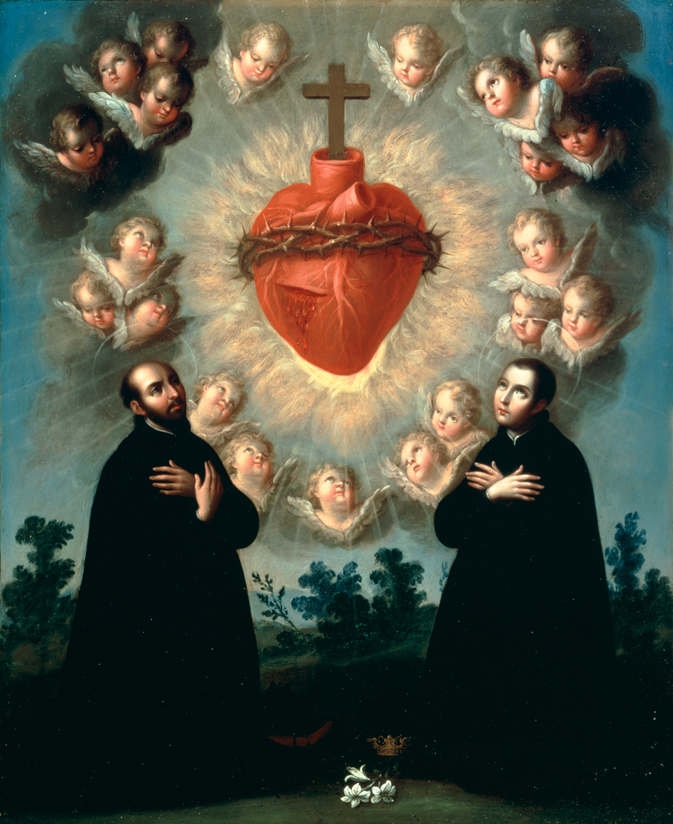
The Sacred Heart of Jesus


O most holy heart of Jesus, fountain of every blessing,
I adore You, I love You, and with lively sorrow for my
sins I offer You this poor heart of mine.
Devotion to the Sacred Heart of Jesus goes back at least to the 11th century, but through the 16th century, it remained a private devotion, often tied to devotion to the Five Wounds of Christ.

The Solemnity of the Sacred Heart of Jesus is commemorated on Friday following the second Sunday of the Pentecost. According to the scriptures, the "Sacred Heart of Jesus" denoted the entire mystery of Christ, the totality of his being, and his person considered in its most intimate essential: Son of God, uncreated wisdom; infinite charity, principal of the salvation and sanctification of mankind. The "Sacred Heart" is Christ, the Word Incarnate, Savior, intrinsically containing, in the Spirit, an infinite divine-human love for the Father and for his brothers.

Jesus, who is one with the Father invites his disciples to live in close communion with him, to model their lives on him and on his teaching. He, in turn, reveals himself as "meek and humble of heart". Aside from the liturgical celebrations, many devotional exercises are connected with the Sacred heart of Jesus has remained one of the most widespread and popular in the church. May we then gaze at the Sacred Heart of Jesus with a humble and meek heart and seek His guidance always.
~~~~~~~~~~~~~~~~~~~~~~~~~~~~~~~~~~~~~~~~~~~~~~~

Meditation

Devotion to the Sacred Heart, as we know it, began about the year 1672. On repeated occasions, Jesus appeared to Saint Margaret Mary Alacoque, a Visitation nun, in France, and during these apparitions He explained to her the devotion to His Sacred Heart as He wanted people to practice it. he asked to be honored in the symbol of His Heart of flesh; he asked for acts of reparation, for frequent Communion, Communion on the First Friday of the month, and the keeping of the Holy Hour.
When the Catholic Church approved the devotion to the Sacred Heart of Jesus, she did not base her action only on the visions of Saint Margaret Mary. The Church approved the devotion on its own merits. There is only one Person in Jesus, and that Person was at the same time God and Man. His Heart, too, is Divine -- it is the Heart of God.
There are two things that must always be found together in the devotion to the Sacred Heart: Christ's Heart of flesh and Christ's love for us. True devotion to the Sacred Heart means devotion to the Divine Heart of Christ insofar as His Heart represents and recalls His love for us.
In honoring the Heart of Christ, our homage lingers on the Person of Jesus in the fullness of His love. This love of Christ for us was the moving force of all he did and suffered for us -- in Nazareth, on the Cross, in giving Himself in the Blessed Sacrament, in His teaching and healing, in His praying and working. When we speak of the Sacred Heart, we mean Jesus showing us His Heart, Jesus all love for us and all lovable.
Jesus Christ is the incarnation of God's infinite love. The Human Nature which the Son of God took upon Himself was filled with love and kindness that has never found an equal. He is the perfect model of love of God and neighbor.
Every day of His life was filled with repeated proofs of "Christ's love that surpasses all knowledge" (Eph 3:19). Jesus handed down for all time the fundamental feature of His character: "Take My yoke upon your shoulders and learn from Me, for I am meek and humble of Heart" (Mt 11:29). He invited all, refusing none, surprising friends and rivals by His unconditional generosity. The meaning of love in the life of Jesus was especially evident in His sufferings. Out of love for His Father He willed to undergo the death of the Cross. "The world must know that I love the Father and do just as the Father has commanded Me" (Jn 14:31).
The love that Jesus bore toward us also urged Him to undergo the death of the Cross. At the Last Supper, He said, "There is no greater love than to lay down one's life for one's friends" (Jn 15:13)
The Heart of Jesus never ceases to love us in heaven. He sanctifies us through the Sacraments. These are inexhaustible fountains of grace and holiness which have their source in the boundless ocean of the Sacred Heart of Jesus.
~~~~~~~~~~~~~~~~~~~~~~~~~~~~~~~~~~~~~~~~~~~~~~~

Novena Prayer

Divine Jesus, You have said, "Ask and you shall receive; seek and you shall find; knock and it shall be opened to you." Behold me kneeling at Your feet, filled with a lively faith and confidence in the promises dictated by Your Sacred Heart to Saint Margaret Mary. I come to ask this favor: Mention your request).
To whom can I turn if not to You, Whose Heart is the source of all graces and merits? Where should I seek if not in the treasure which contains all the riches of Your kindness and mercy? Where should I knock if not at the door through which God gives Himself to us and through which we go to God? I have recourse to You, Heart of Jesus. In You I find consolation when afflicted, protection when persecuted, strength when burdened with trials, and light in doubt and darkness.
Dear Jesus, I firmly believe that You can grant me the grace I implore, even though it should require a miracle. You have only to will it and my prayer will be granted. I admit that I am most unworthy of Your favors, but this is not a reason for me to be discouraged. You are the God of mercy, and You will not refuse a contrite heart. Cast upon me a look of mercy, I beg of You, and Your kind Heart will find in my miseries and weakness a reason for granting my prayer.

Sacred Heart, whatever may be Your decision with regard to my request, I will never stop adoring, loving, praising, and serving You. My Jesus, be pleased to accept this my act of perfect resignation to the decrees of Your adorable Heart, which I sincerely desire may be fulfilled in and by me and all Your creatures forever.

Grant me the grace for which I humbly implore You through the Immaculate Heart of Your most sorrowful Mother. You entrusted me to her as her child, and her prayers are all-powerful with You. Amen.
~~~~~~~~~~~~~~~~~~~~~~~~~~~~~~~~~~~~~~~~~~~~~~~
Offering

My God, I offer You all my prayers, works, joys, and sufferings in union with the Sacred Heart of Jesus, for the intentions for which He pleads and offers Himself in the Holy Sacrifice of the Mass, in thanksgiving for Your favors, in reparation for my sins, and in humble supplication for my temporal and eternal welfare, for the needs of our holy Mother the Church, for the conversion of sinners, and for the relief of the poor souls in purgatory.
~~~~~~~~~~~~~~~~~~~~~~~~~~~~~~~~~~~~~~~~~~~~~~~


“For this, O Jesus, was Your sacred Side pierced, that it might give us an easy entrance. Your Heart was opened that we might dwell there, safe from exterior disturbances. In addition to this, You were pierced by a spear, so that through the visible Wound, we could see the invisible one which love inflicted on You, for He who burns with love, is wounded by love. What better evidence of Your ardent love could You have given us than by permitting the lance to pierce, not only Your Body, but even Your Heart? The wound in Your Flesh then shows forth the wound in Your Spirit. “Who will not love that Heart so deeply wounded? Who will not return love to One who so loved us? Who will not embrace a Spouse so chaste? Certainly the soul loves You in return, O Lord, who, knowing itself to be wounded by Your love, cries to You: Your charity has wounded me! We too, pilgrims in the flesh, love as much as we can, and embrace the One who was wounded for us, whose Hands, Feet, Side, and Heart were pierced. Let us love and pray: ‘O Jesus, deign to bind our hearts, still so hard and unrepentant, with the chain of Your love and wound them with its dart’” (St. Bonaventure).
“O Jesus, a soldier opened Your side with his lance, so that, through the gaping wound, we might know the charity of Your Heart, which loved us unto death, and that we might enter into Your unutterable love through the same channel by which it came to us. Approach, then, O my soul, the Heart of Christ, that magnanimous Heart, that hidden Heart, that Heart which thinks of all things and knows all things; that loving Heart, all on fire with love. Make me understand, O Lord, that the door of Your Heart was forced open by the vehemence of Your love. Allow me to enter into the secret of that love which was hidden from all eternity, but is now revealed by the wound in Your Heart” (St. Bernardine of Siena).

Tuesday, May 5, 2015

NOVENA in HONOR of OUR LADY OF THE BLESSED SACRAMENT

FIRST DAY THE TITLE OF OUR LADY OF THE MOST BLESSED SACRAMENT

O Sacrament Most Holy, O Sacrament Divine, All praise and all thanksgiving be every moment Thine 
Blessed be the holy and Immaculate Conception of the Blessed Virgin Mary, Mother of God! 
O Virgin Immaculate, Mother of Jesus and our tender Mother, we invoke thee under the title of Our Lady of the Most Blessed Sacrament, because thou art the Mother of the Savior who lives in the Eucharist, and because it was from thee that He took the Flesh and Blood with which He there feeds us! We invoke thee under that title because, again, thou art the sovereign dispensatrix of all graces and, consequently, of those contained in the august Eucharist, also, because thou didst first fulfill the duties of the Eucharistic life, teaching us by thy example how to assist properly at the Holy Sacrifice of the Mass, how to communicate worthily, and how to visit frequently and piously the Most Blessed Sacrament. 
V. Pray for us, O Virgin Immaculate, Our Lady of the Most Blessed Sacrament.  R. That the Eucharistic Kingdom of Jesus Christ may come among us! 


Let us pray: 
Lord Jesus Christ, our King and our God, who having become Man to make us sharers in The Divinity, art truly our Bread in the adorable Eucharist, grant, we beseech Thee, that in venerating so great a Mystery, we may be mindful of the most sweet Virgin Mary, of whom Thou didst will to be conceived by the operation of the Holy Ghost! Grant, also that we may imitate the worship that she rendered while on earth to this most august Sacrament, so we may behold Thy Eucharistic Kingdom spread and flourish throughout the whole world! O Thou who livest and reignest forever and ever! Amen. 


PRAYER TO OUR LADY OF THE MOST BLESSED SACRAMENT
O Virgin Mary, Our Lady of the Most Blessed Sacrament, the glory of Christians, the joy of the universal Church, and the hope of the world, pray for us. Kindle in all the faithful a lively devotion to the most Holy Eucharist, so that they may be worthy to receive Holy Communion every day. 
Our Lady of the Most Blessed Sacrament, pray for us. Let us with Mary Immaculate adore, thank, supplicate, and console the most sacred and beloved Eucharistic Heart of Jesus. 


SECOND DAY MARY AND THE HOLY MASS
O Sacrament Most Holy, etc.  Blessed be the holy, etc. 
O Virgin Immaculate, after having been present at the death of thy Divine Son on Calvary, where thou didst unite thy immense sorrow to the Redeemer's sacrifice, thou didst frequently assist at the real, though mysterious, renewal of that adorable sacrifice in the celebration of the Holy Mass. Teach us by thy example to esteem as it deserves the divine action performed at the altar, and obtain for us the grace to be able often, and even daily, to assist piously at the Holy Sacrifice. 
Versicle, Response, and Prayer as on the first day


THIRD DAY MARY AND HOLY COMMUNION
O Sacrament Most Holy, etc.  Blessed be the holy, etc. 
O Virgin Immaculate, thy Communions were the most fervent, the most holy that were ever made! When thou didst possess thy Divine Son in thy breast, thou didst love Him with a love exceeding that of any other creature soever for his God. Teach us to make Holy Communion the center of our life, and may that life be spent in preparing us for so great an action and in thanking God for so inappreciable a benefit!
Versicle, Response, and Prayer as on the first day


FOURTH DAY MARY AND THE REAL PRESENCE
O Sacrament Most Holy, etc.  Blessed be the holy, etc. 
O Virgin Immaculate, who after the ascension of thy Divine Son, didst console thy exile on earth by thy Real Presence of Jesus in the Sacrament, and didst spend before the tabernacle the greater part of thy days and even thy nights, make us comprehend the treasure we possess on the altar. Inspire us to visit often the God of Love in the Sacrament in which He abides to receive the homage that He deserves by so many titles, and to guide. protect, and console us in this exile! 
Versicle, Response, and Prayer as on the first day


FIFTH DAY MARY, THE MODEL OF ADORERS
O Sacrament Most Holy, etc.  Blessed be the holy, etc. 
O Virgin Immaculate, thou art our perfect Model in the service of the Divine Eucharist. With the most lively faith and the most profound respect thou didst adore Jesus 
hidden under the sacramental veils. After thy example we desire to render to the Sacred Host all the honor due the Divinity and the glorified Humanity of the Son of God made Man. We wish to maintain at all times in the holy place the modesty and recollection becoming true adorers. 
Versicle, Response, and Prayer as on the first day


SIXTH DAY MARY, THE MODEL OF THANKSGIVING
O Sacrament Most Holy, etc.  Blessed be the holy, etc. 
O Virgin Immaculate, who didst return to Jesus so perfect a Thanksgiving for the institution of the Divine Eucharist and the ineffable Gift in which the Savior exhausted His power and the treasures of His Heart, teach us to thank thy Divine Son for this great benefit, and especially to make our thanksgiving well when we have had the happiness of receiving Him in Holy Communion. 
Versicle, Response, and Prayer as on the first day


SEVENTH DAY  MARY, THE MODEL OF REPARATION
O Sacrament Most Holy, etc. Blessed be the holy, etc. 
O Virgin Immaculate thou didst adore thy Divine Son in His state of perpetual Victim, always immolated on our altars, incessantly demanding, by His death, grace and mercy for sinners. We unite with thy dolors and thy perfect reparation. We desire to accept our daily trials for love of Him, and with thee to console Jesus for the ingratitude of men and the outrages He daily receives in the Blessed Sacrament. 
Versicle, Response, and Prayer as on the first day


EIGHTH DAY MARY, THE MODEL OF PRAYER
O Sacrament most holy, etc. Blessed be the holy, etc. 
O Virgin Immaculate, while the Apostles went to preach the Gospel, thou didst remain close to the tabernacle, supplicating for them the goodness of the Savior, and thy prayer obtained for them the grace to convert the world! Teach us to pray, above all, to pray near the tabernacle, where Jesus wills to abide continually in order to hear our petitions. Teach us to pray for the extension of the Eucharistic kingdom, for the salvation of the whole world, for the exaltation of the Holy Church, and most especially for the sanctification of the clergy and the conversion of sinners. 
Versicle, Response, and Prayer as on the first day


NINTH DAY MARY, THE DISPENSATRIX OF EUCHARISTIC GRACES
O Sacrament Most Holy, etc.  Blessed be the holy, etc. 
0 Virgin Immaculate, Mother most loving and admirable Model of adorers of Jesus in the Blessed Sacrament, thou art also the dispensatrix of the graces necessary to fulfill that great duty! Grant us, then, we beseech thee, as the fruit of this novena, the virtues that will render our adoration less unworthy of thy Divine Son. Teach us to honor so well this Mystery of mysteries that we may receive here below the graces it contains, in order to enjoy in heaven the eternal life of which it is the pledge! 
Versicle, Response, and Prayer as on the first day


Taken from Volume VII of the Eymard Library Courtesy of the Congregation of the Blessed Sacrament

Friday, April 17, 2015

Special Novena

Please join my friend Jen and myself in a very easy, but very important novena ... 9 Memorare's a day/9 Days. It begins this Friday (4/17/15) for the deliverance of the persecuted, and the protection and conversion of our nation. Please tell all you know and let's really get this FLYING! Thank you! 

 http://veilsandvocations.blogspot.com/2015/04/a-novena-and-giveaway-in-7qt.html

http://veilsandvocations.blogspot.com/2015/04/a-flying-novena.html